

The Fed’s Firewall
21 January 2026
Warsh at the helm: restoration, not reinvention
5 February 2026RISK INSIGHTS
Japan’s Truss Moment?
By Validus | 28 January 2026 | 5 min read

Harun Thilak, Head of Global Capital Markets NA
Japan’s snap election and unfunded tax-cut proposals have sparked an unusually sharp reaction in both JGBs and the yen, unsettling long-held assumptions about Japan’s fiscal safety net. Prime Minister Takaichi is acting from a position of political strength, but the lack of clear funding behind her stimulus plans has left investors questioning how much fiscal risk the market is really willing to absorb. The sell-off in long-dated bonds and renewed pressure on the yen suggest that markets are becoming less willing to look through fiscal uncertainty, even in a country long seen as structurally insulated. There has been some respite for the time being with potential intervention cues from official sources in USDJPY but the path ahead is set to be volatile.
Key takeaways:
- Japan’s snap election and unfunded tax cuts are prompting markets to rethink assumptions about fiscal credibility and debt sustainability
- The sharp rise in long-dated JGB yields and renewed yen weakness show investors pushing back against political risk
- As pressure builds across bonds, FX and policy, the BOJ’s ability to steady markets without undermining its normalization plans may become increasingly constrained and support may be needed from other avenues such as potential market intervention cues from official authorities
Snap Elections, Unfunded Tax Cuts and a JGB Shock
Japan's political landscape has already seen significant upheaval in 2026, marked by Prime Minister Sanae Takaichi's bold decision to call a snap general election on February 8. This move - announced amid approval ratings of around 70% - aims to secure a stronger mandate for her reflationist agenda, including substantial tax cuts and increased government spending. Takaichi, who ascended the internal ranks of the Liberal Democratic Party (LDP) to become Japan’s first female Prime Minister in October 2025, dissolved the House of Representatives on January 19, 2026, triggering concerns about potential policy delays and a political vacuum during a period of global economic uncertainty.
Takaichi’s snap-election gambit
The lower-house dissolution comes as the LDP governs on a knife-edge in an increasingly fragmented Diet. With Komeito having quit its long-running partnership and shifted toward the opposition, the LDP is now relying on its coalition with the Japan Innovation Party (JIP) to preserve a one-seat majority - 233 of 465 seats - leaving little margin for internal dissent. Even so, Takaichi’s personal approval has remained strong, fueled by a firm stance on national security and an expansionary, reflation-leaning economic agenda - confidence that has emboldened her to seek a snap mandate.
Tax cuts without a cheque?
A central pillar of the Takaichi election campaign is a package of unfunded tax cuts, led by a proposed suspension of the consumption tax on food for a two-year period – an estimated ¥5tn (about $31bn) a year in lost revenue. This levy - part of Japan's broader sales tax system - has been a contentious issue. Takaichi argues it exacerbates cost-of-living pressures amid lingering inflation from post-pandemic recovery. Rival parties have struck a similar tone, floating income-tax cuts and broader exemptions, mirroring global trends toward fiscal populism seen in the Western world. However, these cuts lack clear funding mechanisms and could exacerbate Japan's already staggering public debt, which stands at around 250% of GDP - the highest in the G7 - without corresponding revenue measures. Takaichi's strategy draws parallels to former UK Prime Minister Liz Truss's 2022 mini-budget, when large, unfunded tax cuts triggered a sharp loss of market confidence and acute volatility in sterling and gilts. In Japan, this has intensified debates over fiscal discipline, especially as the country navigates demographic challenges such as an ageing population and shrinking workforce.
JGBs and JPY take the hit
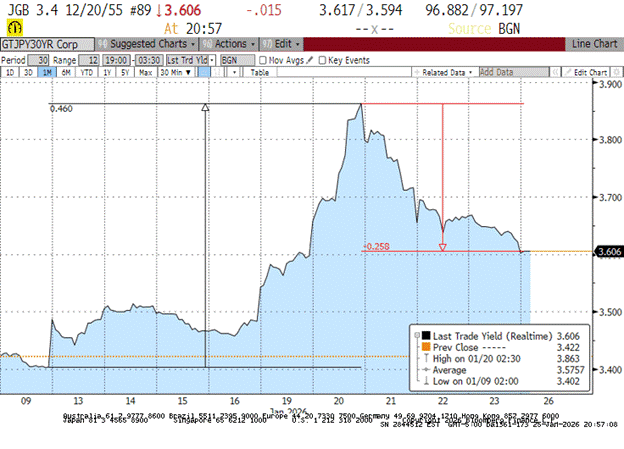
The announcement has elicited sharp reactions in Japanese financial markets, particularly in interest rates and FX. Japanese government bonds (JGBs) experienced a historic sell-off, with yields surging to multi-decade highs. The 30-year JGB yields rose almost 45 basis points in January, reflecting investor anxiety over increased borrowing needs to fund tax cuts without offsetting measures, potentially inflating Japan's debt servicing costs.
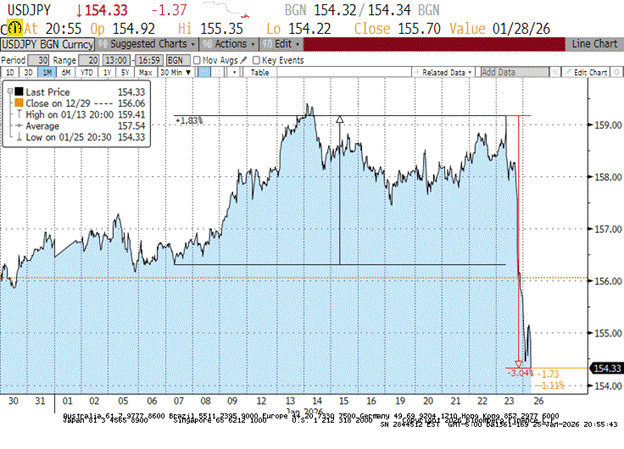
FX markets have been equally turbulent, with USD/JPY rising by around 180 basis points and getting close to the psychological barrier of 160. On January 23, we had a sharp turnaround in USDJPY as there was chatter in the market of calls made by the Fed to various banks possibly on behalf of the Japanese Ministry of Finance (MOF) to conduct “rate checks” on USDJPY – a move considered by market participants as a precursor to potential intervention in the USDJPY market.
Chart 1: USDJPY in January 2026
Source: Bloomberg
Chart 2: JGB 30Y yields in January 2026
Source: Bloomberg
Paths ahead: credible offsets, BOJ constraints, intervention risk
Looking ahead, the likely scenarios hinge on the election outcome. A decisive LDP victory could embolden Takaichi to push through her agenda, potentially stabilising markets if she outlines credible funding, such as spending cuts elsewhere or economic growth offsets. However, a fragmented result or coalition concessions might lead to watered-down policies, delaying reforms and prolonging uncertainty. The risk of a “Truss shock” looms large: if bond vigilantes continue their revolt, yields could spike further, forcing the BOJ to accelerate rate hikes or resume aggressive bond buying, which might undermine its normalisation efforts. Currency intervention by official authorities continues to remain a wildcard, especially if USD/JPY approaches 160. Broader implications include global contagion, given Japan's role as a major creditor nation; a sustained yen slide could pressure Asian currencies and heighten trade tensions with the US.
Takaichi's snap election and unfunded tax cuts represent a high-stakes gamble to revitalise Japan's economy. While markets have reacted with alarm, signaling fiscal fears, the path forward depends on electoral clarity and policy execution. As Japan balances stimulus with sustainability, the world watches closely, aware that missteps could reverberate across global financial markets.