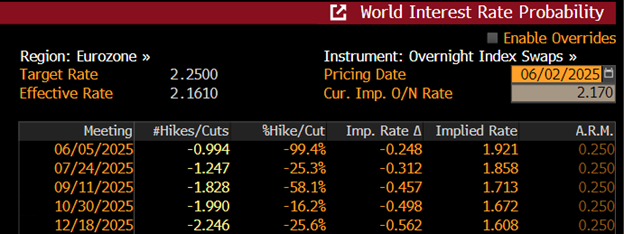
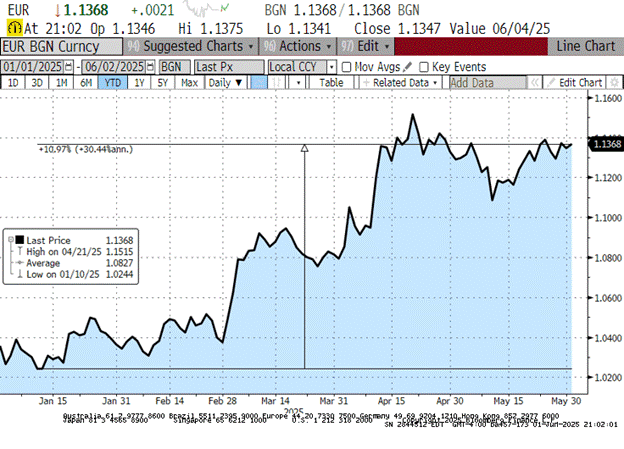
As the European Central Bank (ECB) prepares for its upcoming monetary policy meeting on June 5, 2025, the outlook for the Euro remains a focal point for investors and policymakers. The interplay of recent macroeconomic data, trade policy uncertainties and the ECB’s cautious approach to monetary policy will shape the trajectory of the Euro in the near term. We examine these dynamics, incorporating insights from recent ECB projections, macroeconomic indicators and the evolving EU-US trade landscape.
Cautious approach remains
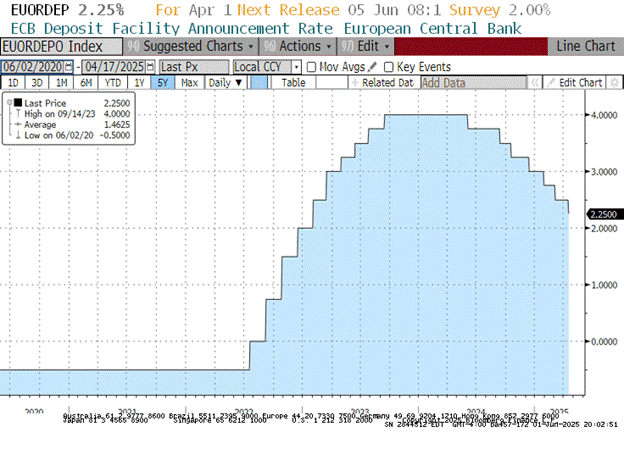
The ECB has adopted a cautious approach to monetary policy, reflecting heightened uncertainty driven by global trade tensions and a shifting macroeconomic environment. At its April 2025 meeting, the ECB lowered its key interest rates by 25 basis points, bringing the deposit facility rate to 2.25%. This marked the seventh consecutive rate cut since June 2024, reducing rates from a 2023 peak of 4%. The ECB’s rationale hinges on a disinflationary trend, with headline inflation declining to 2.2% in March 2025 and core inflation falling to 2.4%, the lowest since early 2022. ECB staff project headline inflation to average 2.3% in 2025, 1.9% in 2026, and 2.0% in 2027, aligning closely with the ECB’s 2% target.