
A New Statutory Playbook
The US President lambasted the ruling while swiftly pivoting to alternative legal avenues within his purview. Hours after the decision, he announced a 10% global tariff under Section 122 of the Trade Act of 1974, effective February 24, 2026, citing a “large and serious” balance-of-payments deficit. The next day, February 21, he escalated it to 15% – the statutory maximum – via executive order, claiming it would counteract nations “ripping off” the U.S. Unlike IEEPA’s open-ended authority, Section 122 limits tariffs to 150 days without congressional extension, making this a temporary measure potentially expiring by July 2026. The President also signaled plans to invoke other statutes, such as Section 232 for national security and Section 301 for unfair practices, reinstating elements of the struck-down regime. This defiance underscores the President’s commitment to protectionism, but it injects fresh uncertainty into global trade, as allies like the UK and EU express alarm over potential violations of existing deals.
Nuances of Presidential Powers and Restrictions on Global Tariffs
The Constitution grants Congress sole authority over tariffs as a form of taxation and regulation of foreign commerce. Presidents lack inherent peacetime power to impose them, relying instead on delegated statutes with built-in constraints.
Section 232 allows tariffs on imports threatening national security, but requires Commerce Department investigations and faces judicial scrutiny for misuse.
Section 301 targets unfair trade practices, permitting retaliatory duties after USTR probes, though limited to addressing specific harms.
Section 122, now in play, addresses balance-of-payments issues with a 15% cap and 150-day sunset, necessitating congressional buy-in for longevity – unlikely amid midterm elections. Lesser-known tools like Section 338 of the 1930 Tariff Act could counter discrimination, authorizing up to 50% duties. However, the Court stressed that delegations must be explicit, with procedural safeguards like time limits and investigations, preventing “transformative expansions” of executive power. Without congressional approval, Presidents cannot enact permanent, universal tariffs, highlighting separation-of-powers tensions.
Dollar Drag
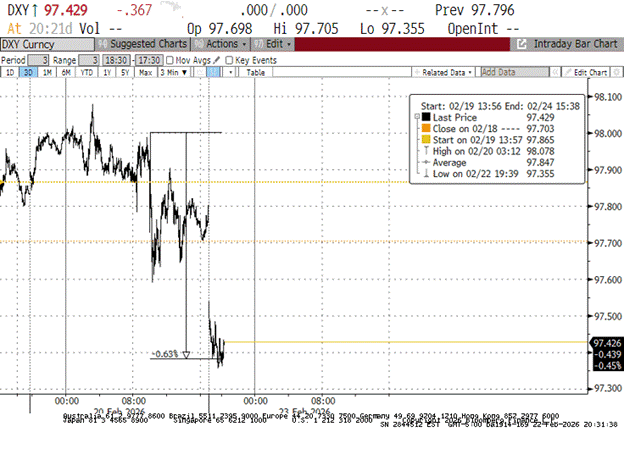
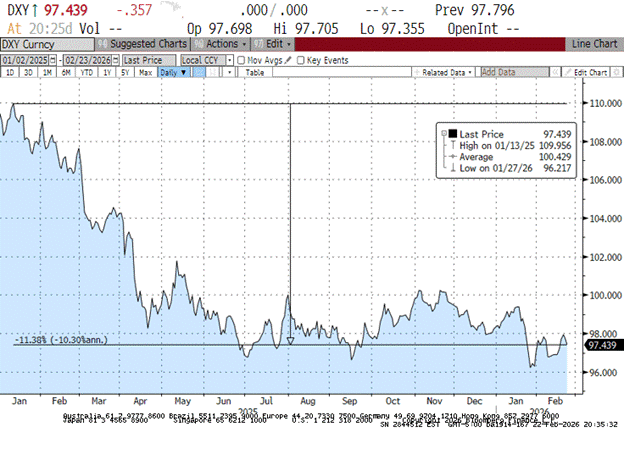
USD has faced the initial brunt following the SCOTUS ruling, with the DXY index currently down about 65 basis points since the decision. This reaction accentuates the downward trend seen in the USD throughout the President’s second term, with the DXY falling by ~11% since January 2025. Prolonged uncertainty could steepen US yield curves, widen credit spreads and divert capital from US assets, thereby pressuring the USD further.