
Six weeks on from the first attacks on Iran and there’s little prospect of an imminent end to the conflict. While both sides have expressed their desire to end the war, Iran’s nuclear ambitions remain a sticking point following the latest round of peace talks. In response, the US has imposed a blockade on the Strait of Hormuz and pledged that the US military will “finish up the little that is left of Iran.”
Last week’s ceasefire helped restore an element of optimism to markets, triggering a ~20% drop in oil prices, a ~30bps drop in 2-year treasury yields and a ~4% rally in equities. As a result, both the S&P 500 and the FTSE 100 are marginally off their all-time highs. This is somewhat precarious, however, given that oil prices remain more than 50% higher than where they were prior to the conflict and the market has shifted from pricing in multiple rate cuts to multiple rate hikes from most central banks. Clearly there are other factors to consider beyond the Middle East conflict, but there’s a risk that the market is set up for disappointment.
What does disappointment look like?
Focusing on FX and interest rate risks, the risk on / risk off relationship between the dollar and equity markets is once again a key feature of the currency markets. This correlation is not as well defined as it has been historically, but the dollar has broadly benefited when equity markets have been under pressure and weakened when stocks have rallied. Sterling is once again showing its high beta tendencies, outperforming the euro when risk assets rally, but struggling when equities are on the back foot.
Meanwhile, interest rates remain volatile as fears of persistent inflation have prompted markets to price out rate cuts from the world’s major central banks. Instead, several rate hikes are now expected, with the Bank of England (BoE) notably predicted to raise rates by ~50bps before year end. Higher rates mean higher borrowing costs but also higher returns for our clients in the credit space.
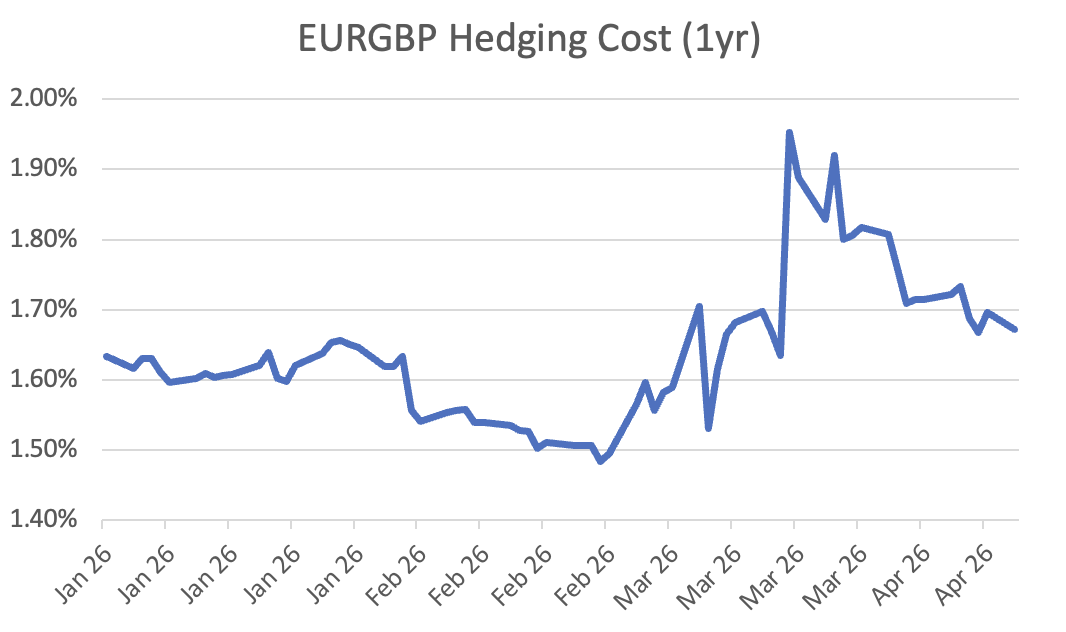
Interest rate volatility will also impact FX hedging costs as differentials widen (or narrow). For example, a European credit fund hedging sterling assets saw its cost of hedging rise from 148bps (excluding credit charges) to 192bps in a less than a month (see chart below) as the market shifted to price in three rate hikes from the BoE’s Monetary Policy Committee (MPC), compared to a more modest adjustment from the ECB. That has since fallen back to 167bps as expectations for the MPC have been pared back to two hikes.