
A lucky break or temporary truce?
Unlike the EU, which faces uniform tariffs, the UK has secured partial exemptions. Key exports—luxury goods, pharmaceuticals, and financial services—remain untouched, while automotive tariffs (10%) undercut the 20% imposed on EU rivals, in addition to the 25% tariff on all foreign cars imported to the US. This divergence suggests Trump’s willingness to court Britain as a transatlantic ally, offering a potential lifeline to the UK economy.
Yet the picture isn’t entirely rosy. Steel and aluminium exports will bear the full 25% burden announced earlier this year, dealing a blow to an already beleaguered sector. The UK’s more balanced trading relationship with the US could accelerate bilateral trade talks, but any deal hinges on Trump’s willingness to negotiate, a factor that seemingly changes day-to-day.
Pragmatism over protest
Downing Street has struck a cautious tone in response to Trump, avoiding direct criticism while emphasising “free and fair trade.” The business community is divided: manufacturers warn of higher input costs (particularly for US-sourced components), while pro-Brexit factions see an opening to fast-track a US-UK pact. Although economists’ GDP estimates vary, they all agree the tariffs will weigh on UK growth, with the situation likely to worsen if global trade tensions deepen.
The Bank of England now faces a thorny dilemma. Core inflation remains sticky at 3.5% and tariffs are certain to add more price pressures, supporting the case for keeping rates higher. On the other hand, growth is set to drop materially, and job losses may soon follow, creating a strong impetus to cut rates to support the economy. This stagflationary bind is every central banker’s nightmare.
A wild ride: markets whiplashed by tariff twists and turns
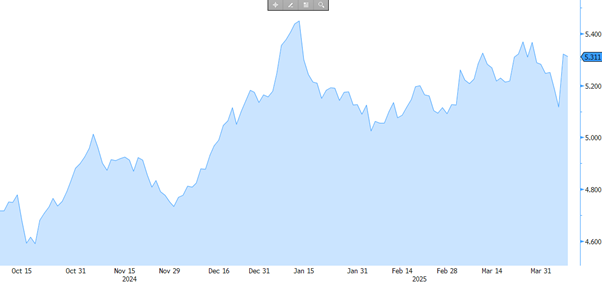
Financial markets have been understandably volatile following the announcements. The pound initially climbed to 1.32 against the dollar as the greenback weakened against most pairs, but has since tumbled to 1.2755. Against the euro, sterling has also suffered. Before the announcement, EUR/GBP was trading at £0.835, but many remark that the euro could benefit from global investors diversifying away from the US dollar to the next most liquid alternative. This rhetoric has sent EUR/GBP soaring, and at time of writing it sits at £0.8580 – a rise of nearly 3% in just 3 days.
In rates markets, the initial reaction saw global yields dip as worries over weaker growth took precedence over inflationary concerns. Though short-term rate expectations have cooled slightly, markets are still pricing in one extra Bank of England rate cut this year compared to pre-Trump speech forecasts. In total, three cuts are projected for 2025, starting in May, leaving rates around 3.75% by year-end.
Longer-term yields have been even more volatile. After initially dropping post-speech, they quickly reversed all gains on Monday, making for an exceptionally wild day for bond traders. Chancellor Reeves will be watching this market closely as higher rates begin to eat into her already sparse fiscal headroom. If the gilt selling continues, Reeves may have to make increasingly difficult choices in the Autumn budget.