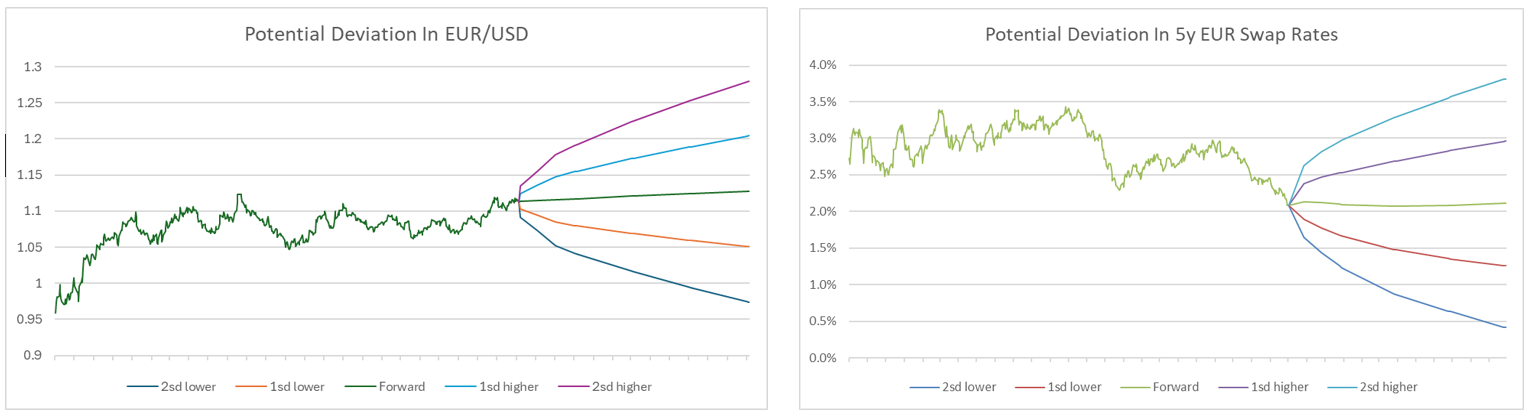
Note: Standard deviation (sd) measures the dispersion in a dataset. A 2 sd range should cover approximately 95.4% of the statistically expected range in the dataset.
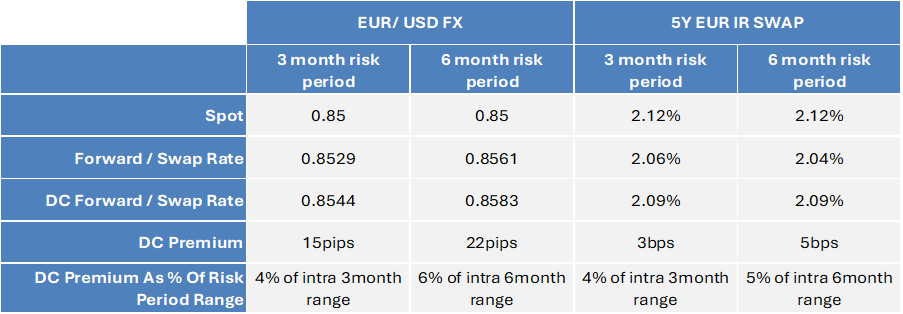
A DCH offers the same hedge profile as a vanilla market hedge (e.g. FX Forward, FX Option, IR Swap or IR Cap). Where it differs from a vanilla instrument is that the DCH only becomes effective once ‘pre-defined conditions’ (such as regulatory approvals) have been met , and the transaction closes (the “deal contingent event”). The hedges are designed to expire without any financial impact if the underlying transaction fails to close.
The benefit of this is that the hedging party can avoid a scenario whereby the hedge incurs a cost (either a premium or a resultant negative mark to market) AND the underlying deal fails to close. This mitigates a scenario where a fund has lost money on a hedge without completing an acquisition (“dead-deal” costs).
How A Deal Contingent Hedge Works
Consider a USD denominated fund purchasing a EUR denominated asset (EUR 100mn). To ensure the deal meets the fund’s expected allocation and IRR requirements (in USD terms), the fund models the value of the asset assuming a particular EUR/USD foreign exchange rate, a particular interest cost of servicing the debt and subsequently a resulting quantity of debt (determined by debt serviceability) . These assumptions are typically based on the prevailing market rates at the time of modelling and submitting a binding bid for the asset.
Once a binding bid for the EUR asset has been submitted the fund is conditionally exposed to:
- Fluctuations in the EUR/USD exchange rate – Should the EUR strengthen between the time of submitting the bid and the time of financial close, the equivalent USD quantum required to purchase the asset will increase.
- Fluctuations in the Euribor rate and the EUR swap rate – Should interest rates rise, this will increase interest costs, reduce free cash flow, and reduce quantum of debt that can be borrowed given debt serviceability ratios.
Both of the above can have a meaningful impact on the overall IRR of an investment.
The complexity arises in recognising that the above risks are conditional – they will only impact the fund should the acquisition close.
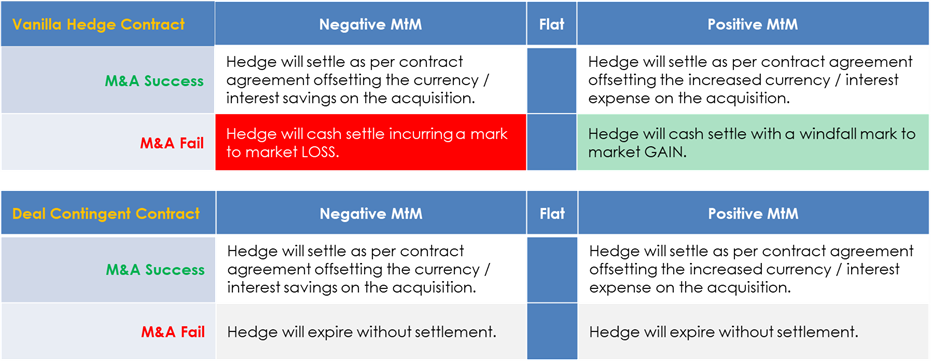
Should the acquisition close successfully, the market risks will materialise and the fund will be required to buy EUR to fund the acquisition and pay interest on the associated debt financing. Any hedging (irrespective of vanilla or deal contingent) will settle as per the agreement and offset the resultant market volatility.
However, in the event the acquisition does not close (e.g. failure to obtain regulatory approval, shareholder vote), the underlying acquisition and its associated risks would no longer prevail.
Had the fund hedged using vanilla instruments, they would need to unwind the respective hedges with any breakage value calculated based on prevailing market conditions. If markets moved adversely since inception, the fund would be required to settle a negative mark to market (MtM) despite not having the underlying exposure.
Options can certainly limit the negative impact on the fund but it still entails a potential ‘dead-deal’ cost.