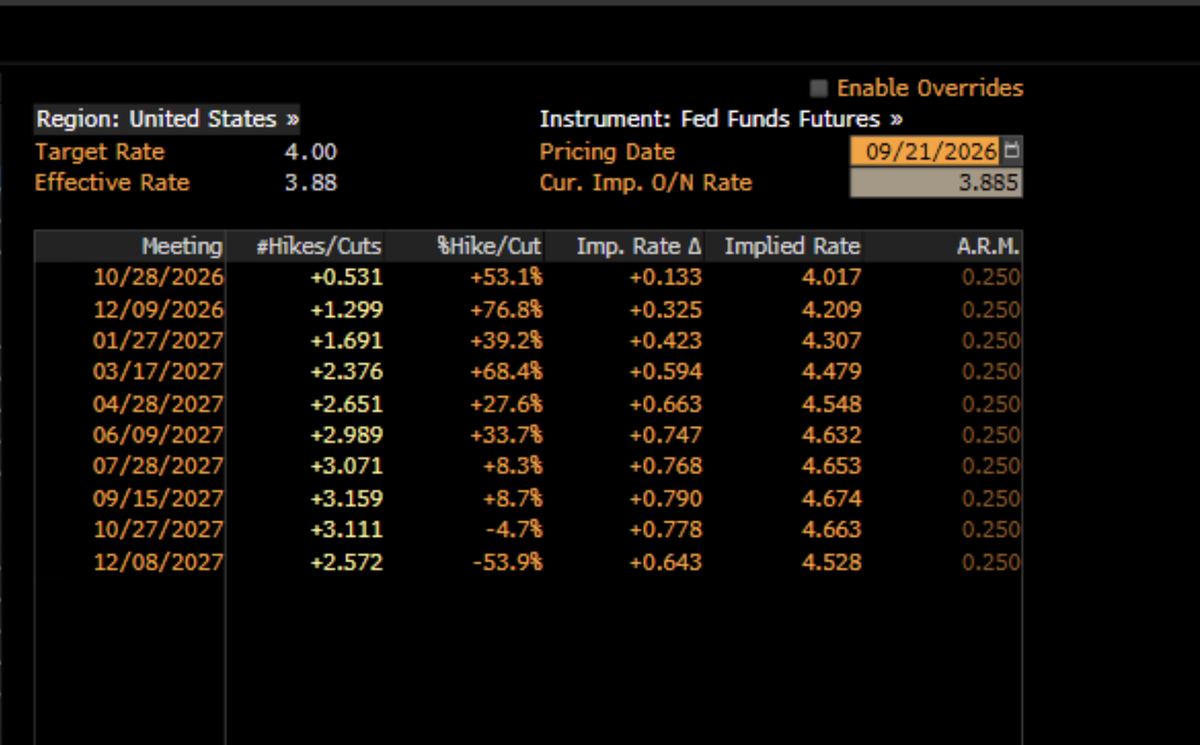

On September 16, 2026, the Federal Open Market Committee (FOMC) raised the target range for the federal funds rate by 25 basis points to 3.75–4.00 percent. The decision was unanimous (12–0), marking the first increase since 2023 and bringing an end to a prolonged period of unchanged rates following earlier cuts.
The accompanying statement was notably concise. It described economic activity as expanding at a solid pace, with resilient domestic spending, strong productivity growth, and robust capital investment. Job gains remained broadly in line with growth in the labor force, while the unemployment rate changed little.
Inflation, however, “remains elevated.” The Committee stated that the action would support a more timely return to its 2% goal and reaffirmed its commitment to price stability, while maintaining ample reserves in the banking system.
This outcome reflected a shift from the July meeting, when the Committee had held rates at 3.50–3.75 percent by a 9–3 vote, with three members preferring an immediate hike. The updated Summary of Economic Projections (SEP) also pointed to a somewhat firmer economic backdrop, with median real GDP growth of 2.3 % in 2026 and 2.4% in 2027, unemployment at 4.1%, and total PCE at 3.7% this year before falling to 2.35% next year. The median placed the appropriate federal funds rate at 4.1% at the end of both 2026 and 2027.
Chair Warsh’s Press Conference and Limited Forward Guidance
Chair Kevin Warsh’s post-meeting press conference was notably brief, among the shortest held after a regular FOMC meeting since the practice began in 2011. Consistent with his previously stated preference for reduced forward guidance and more concise communication, Warsh avoided detailed signals about the future path of policy.
Warsh framed the hike as the removal of “a dose of accommodation.” He noted that he and many colleagues found it difficult to describe broad financial conditions as restrictive, citing strong hiring, private-sector earnings, capital investment, and robust credit flows to businesses.
Labor markets remained healthy, with the unemployment rate near 4.1%, rising job openings and hours worked, and claims consistent with full employment. The predominant focus, he stressed, was price stability: inflation has remained above target for more than five years, recent readings have shown insufficient progress in underlying inflation, and too many categories continue to post increases above 3%. Geopolitical developments added further uncertainty, while commodity prices also warrant close monitoring.
He reiterated the standard he had articulated at Jackson Hole: the Committee needed confidence that underlying inflation was moving toward the 2 percent objective clearly and at sufficient speed. That standard had not been met, prompting the unanimous action. Warsh declined to characterize the new rate level relative to neutral in operational terms, describing neutral-rate discussions as useful academically but not determinative of current decisions. He also avoided commenting on political pressure for lower rates and stressed the Fed’s independence and dual mandate.
The short format, limited follow-up questions, and emphasis on observed data rather than forecasts reinforced a deliberate shift away from the more extensive guidance of prior years.
A Stronger US Dollar and Higher Rates
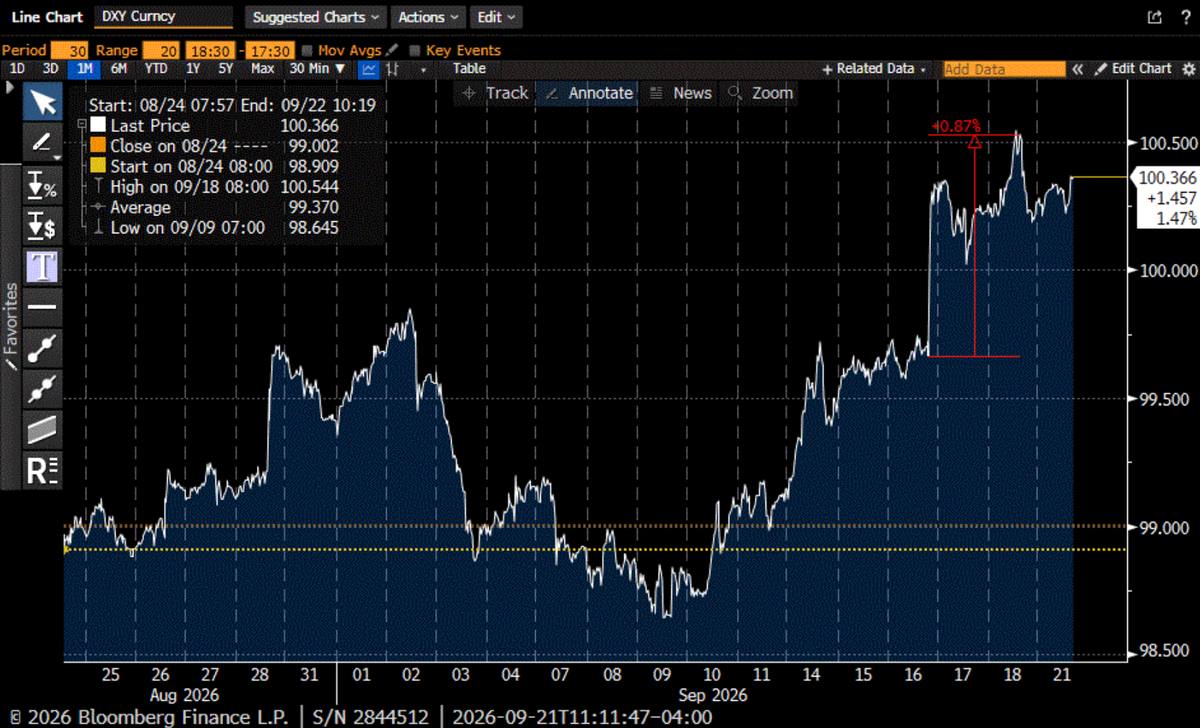
Markets had largely anticipated the 25-basis-point hike, yet the combination of a unanimous vote, higher inflation and rate projections, and Warsh’s firm language on price stability produced a distinctly hawkish reaction. The US dollar strengthened meaningfully, with gains reflecting expectations for a higher US rate path relative to other major economies.
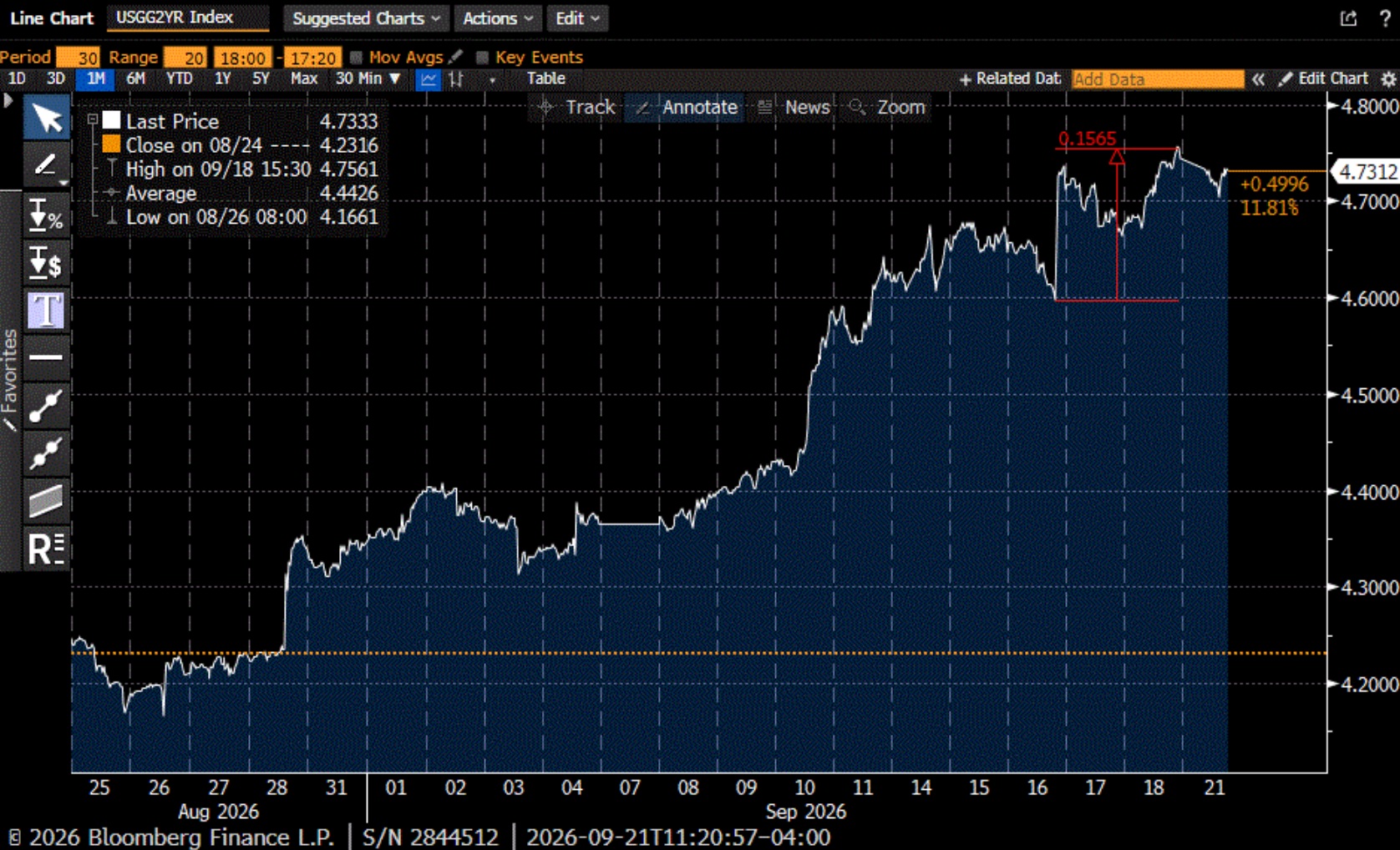
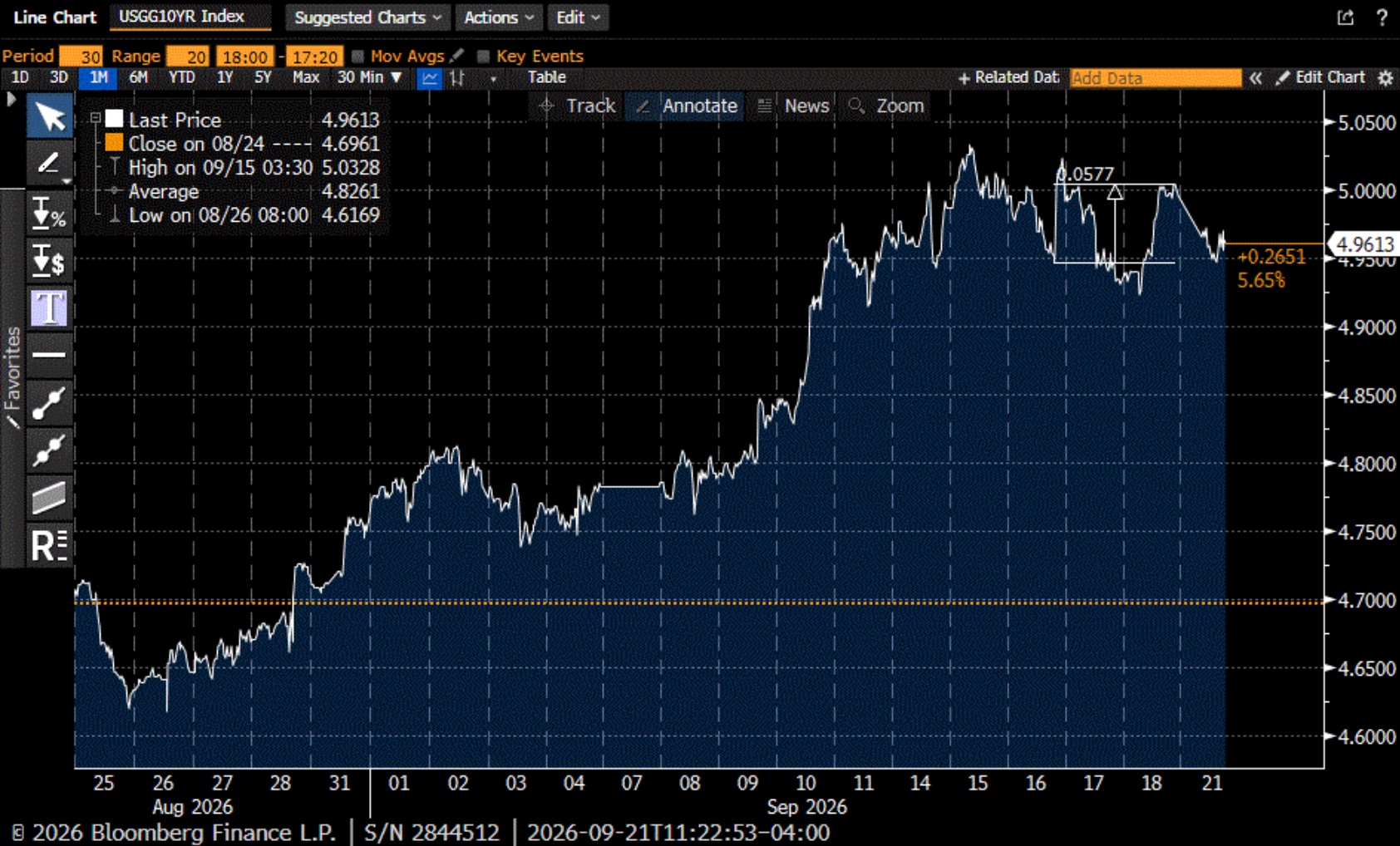
Treasury yields rose in the immediate aftermath, particularly at the front end. The two-year yield moved higher as markets priced the possibility of further tightening, while the 10-year yield approached or briefly exceeded 5% before retracing somewhat.
The curve flattened modestly as short-term rates adjusted more than long-term rates. Higher policy rates and the prospect of further increases can support the dollar by widening interest-rate differentials and attracting capital toward higher-yielding US assets. Higher real yields can also strengthen the currency while placing pressure on non-yielding assets such as gold.