
A coalition puzzle ahead
Germany’s federal election delivered a fragmented outcome, pushing coalition negotiations to the forefront of an already uncertain economic landscape. The CDU, led by Friedrich Merz, won the largest share of the vote but fell short of an outright majority, setting the stage for protracted talks with potential partners. Meanwhile, the SPD and Greens underperformed expectations, reflecting voters’ frustration with recent economic stagnation. The business community will be watching closely: Germany’s pressing economic challenges—from high energy costs to restrictive fiscal policy—require urgent attention, and a lengthy coalition process could delay much-needed reforms.
Strengthening the Bloc: Europe’s renewed focus on defense and infrastructure
The ongoing conflict in Ukraine and President Trump’s geopolitical posturing—peaking in a disastrous Zelenskyy visit to the White House—have sparked a fresh commitment to defense spending across the Bloc. Multiple governments have announced increases in their military budgets, with Germany, having already committed to a €100bn special defense fund in 2022, now signaling further long-term investment beyond this initial boost. France has also accelerated spending plans, raising its military budget for 2024-2030, while Poland has emerged as one of Europe’s biggest spenders, targeting defense expenditure above 4% of GDP—double NATO’s guideline—amid the immediate conflict on their doorstep.
This military expansion is unfolding alongside Germany’s push for broader fiscal stimulus, with reports suggesting a proposed €500bn infrastructure fund designed to bypass the country’s restrictive debt brake. If approved, the fund would direct long-overdue investment into transport, digitalisation and energy infrastructure—sectors critical to reversing Germany’s stagnating growth. Together, these defense and infrastructure initiatives point to a major shift in German fiscal policy, carrying far-reaching implications for sovereign issuance and European interest rates.
Europe’s fiscal shift fuels yield surge
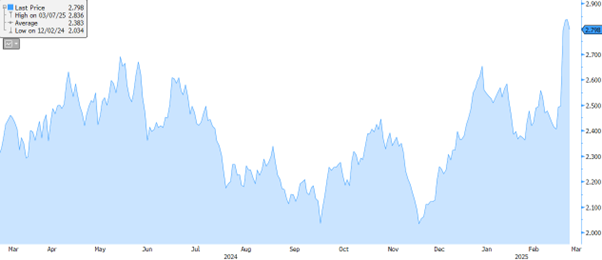
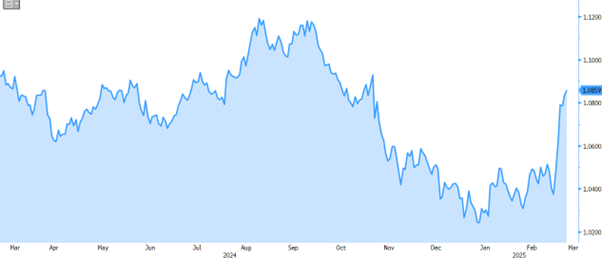
Europe’s changing fiscal stance has not gone unnoticed by bond markets, with yields climbing higher as investors factor in the prospect of increased sovereign issuance and a stronger inflationary impulse. German bund yields—which had been edging lower earlier this year amid recession concerns—reversed course following reports of the proposed €500bn infrastructure fund. Last Wednesday’s 30bps rise was the steepest single-day move since 1989, coinciding with the fall of the Berlin Wall. Amid the excitement surrounding fresh stimulus—particularly one designed to circumvent Germany’s debt brake—the markets are questioning how much fiscal discipline will remain as Germany pivots towards investment-led growth.