
However, we shouldn’t forget the other half of the Fed’s dual mandate, which is to ensure price stability (i.e. control inflation). After July’s meeting, Powell noted that “inflation is still above target and even if you look through tariff effects, it’s still above target” (headline CPI rose 2.7% y/y in July while core CPI rose 3.1% y/y). We are yet to see the impact of tariffs – it’s unlikely to be fully evidenced for a number of months as businesses delay passing it through to consumers for as long as possible – but inflation expectations are for CPI to rise back above 4% in the months ahead, which will give the Fed cause for concern.
The final dynamic to include into the mix is the US administration and its view that interest rates should be ~1.5% lower than they currently are. Of course, the Fed is independent and should not be swayed by politics, yet the administration tends to push hard for what it wants. For now, it seems that Powell will not succumb to the administration’s wishes and his term as Fed Chair runs until May 2026, but markets are already looking beyond that and speculating who will take his place. In the words of the US President: “Whoever’s in there will lower rates. If I think someone is going to keep rates where they are, I’m not going to put them in.”
Why it matters for markets
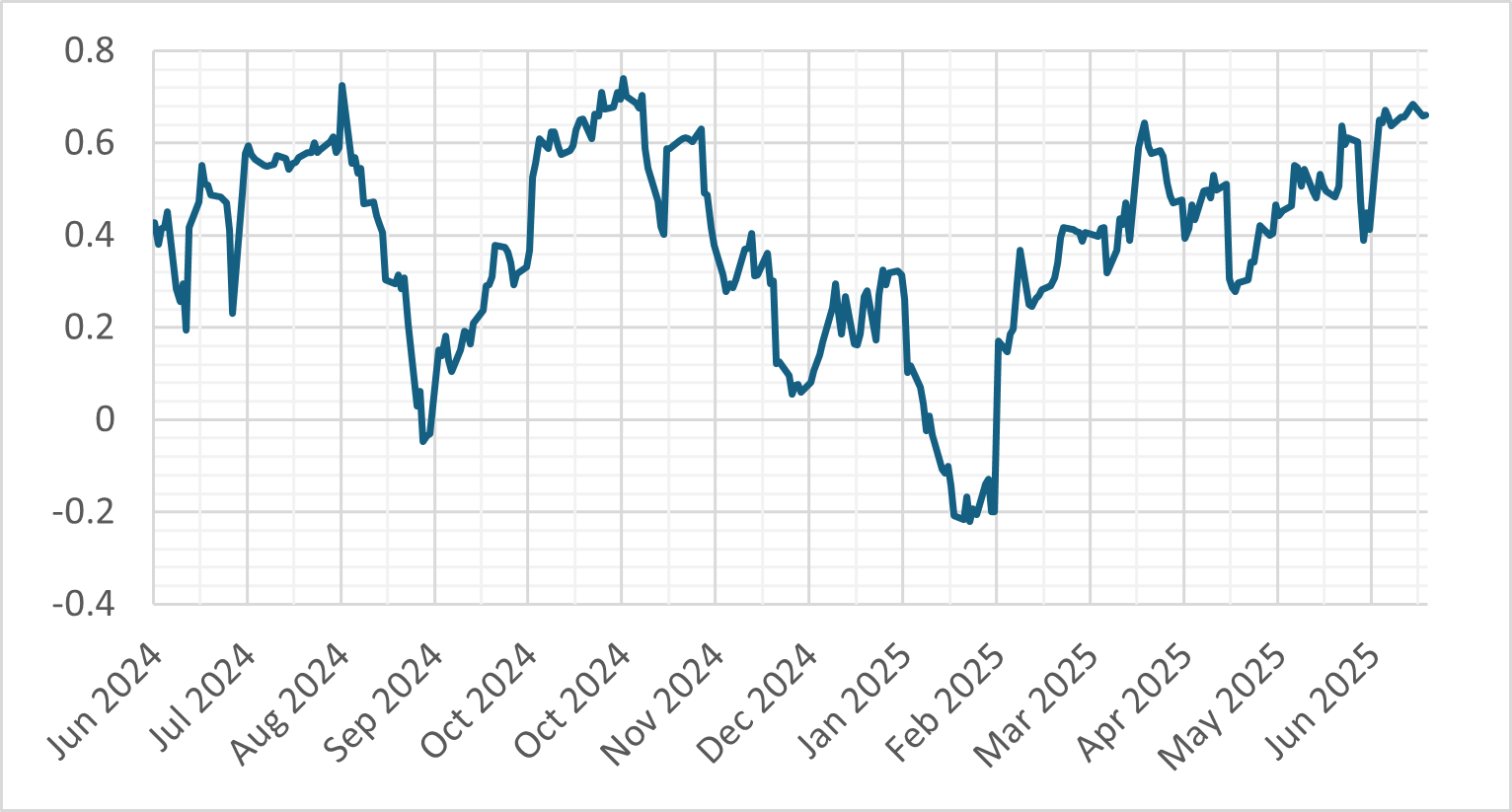
As the chart below shows, the outlook for US interest rates is once again the key influence on USD FX. The relationship broke down during H1 2025 when uncertainty over Trump’s tariff regime triggered large capital outflows from the US, but as confidence returns, interest rates look set to become the main driver for USD FX once again. Consequently, any indication from Powell that the Fed may look to be more accommodating than currently anticipated will almost certainly weigh on the dollar.