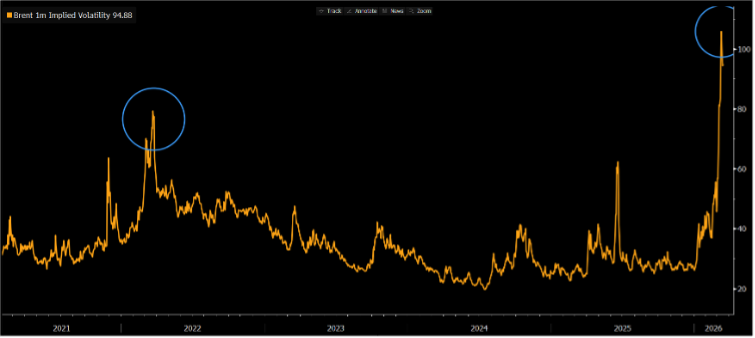
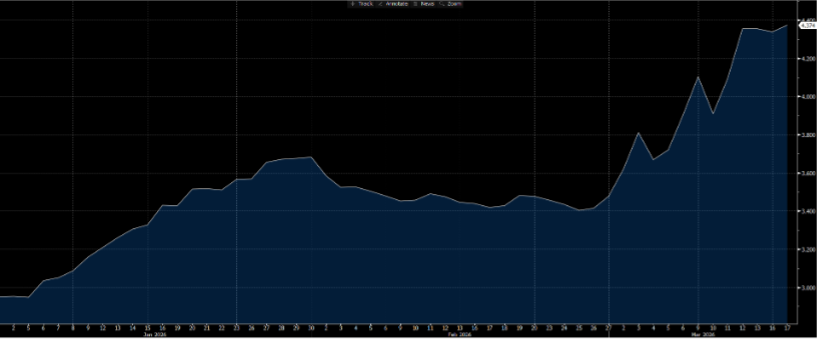
Ahead of a critical week of central banks – with the ECB and Bank of England due to announce policy decisions on 19 March – monetary policymakers are largely beholden to the whims of oil markets, as they were in February 2022. Markets briefly went so far as to price in two 25bp ECB hikes by year-end, though that has since been pared back to around one and a half hikes at the time of writing.
Should inflation – both realized and expected – continue to climb in the near-term, we’ll likely see rates markets ratchet higher as investors position for more aggressive central bank action. UK swap rates have also risen by more than 50bp since the conflict began, demonstrating just how fragile risk appetite remains.
Emerging markets under pressure
In keeping with the broader flight to safety, EM assets have come under greater pressure than their developed market counterparts. Measures adopted in some jurisdictions – including temporary school closures in Pakistan, and work-from-home directives for government employees in Thailand and Vietnam – highlight just how far-reaching the implications of the conflict could become, as governments seek to limit oil consumption.
Additionally, with the shifting strategic ambitions of the US, Kharg Island has emerged as a focal point for recent military activity. The island accounts for 90% of Iran’s crude exports – roughly 1.1 to 1.5 million barrels a day, according to Reuters – and now appears to be central to escalation risks. China, the largest buyer of Iranian crude, has a vested interest in the continued operation of those facilities. If the island’s oil infrastructure were to be struck, as its military assets already have been, and China were drawn deeper into the conflict, it is hard to see any real winners, especially given the likely corresponding spike in energy prices.
Investors should be wary of unhedged exposure, and strategy must remain dynamic as the conflict continues to evolve. Mitigating exogenous shocks and building resilience to key return metrics remains sacrosanct, and the right adviser can certainly play an important role in that process.