
A salient article
Despite the Fed’s previous denials of discussing a 50-bps cut, market participants were increasingly convinced of its likelihood. The shift in sentiment was largely attributed to Nick Timiraos’ article in The Wall Street Journal, which highlighted the difficult choice the Fed was facing and discussed the merits of both 25 bps and 50 bps cuts, ultimately implying the larger cut was coming. Timiraos’ reputation as “the Fed whisperer” for the accuracy of his articles led some to speculate the Fed might be using him to indirectly communicate with the market during media blackout periods – a process referred to as “Nickyleaks” by some market participants.
Regardless of the truth behind these speculations, it is safe to say that the Fed’s communication during this period was confusing. The unexpected 50 bps when cut highlighted the disconnect between official statements and market expectations. Had Timiraos’ article not been published, the market’s reaction would likely have been even more dramatic.
Timiraos sparks limited market reaction
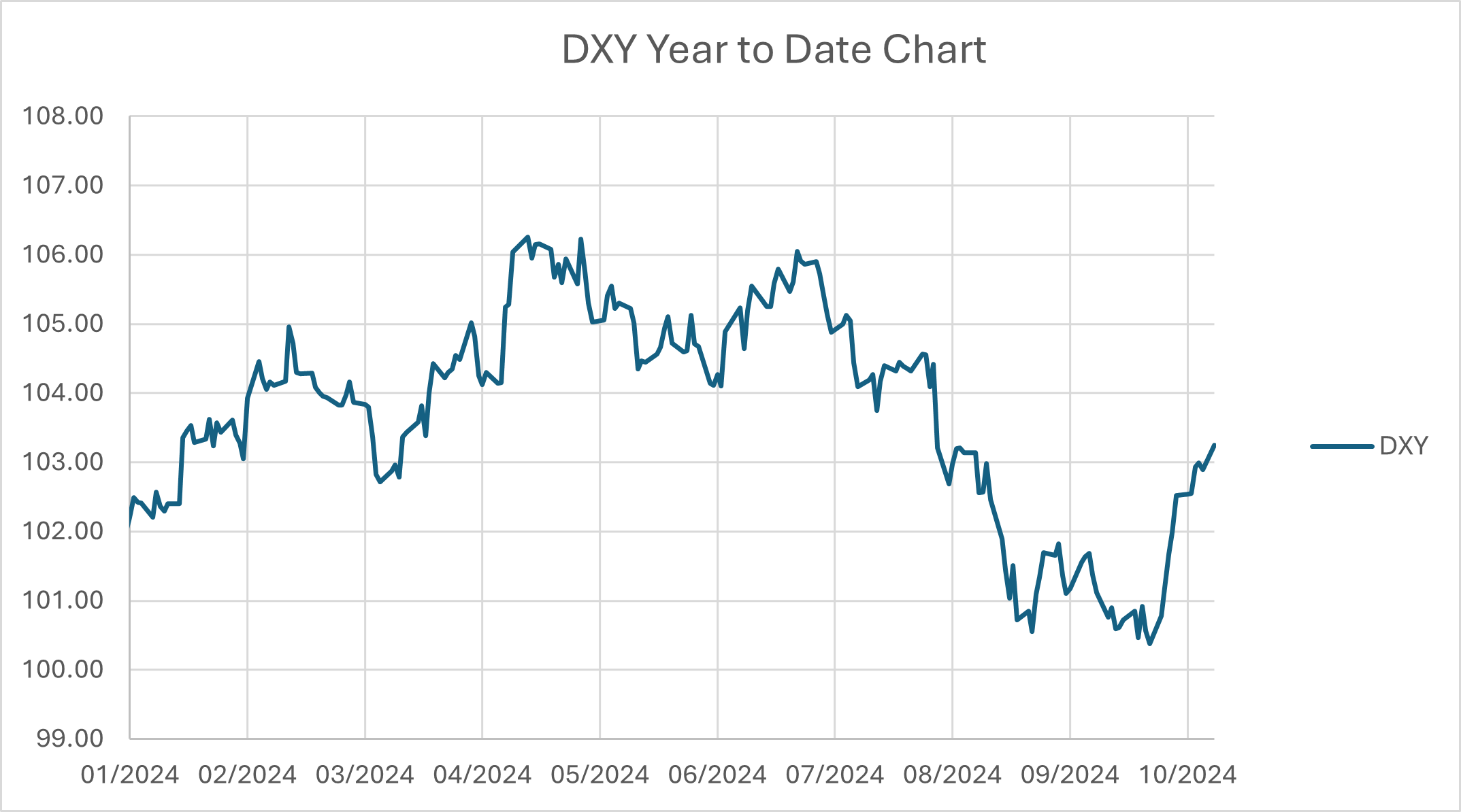
Market expectations for Fed cuts were already high before the article was published, with more than eight cuts priced in by mid 2025. As such, the US rates market reaction was somewhat muted as the pricing only increased slightly to nine cuts. The article had a more pronounced effect on FX and other markets, including gold and equities. The USD index sold off almost 2% in the days following the article, reaching the lowest level in over a year and testing very long-term support around 100.00, which extends back 5 years from a technical perspective (not pictured).
The Fed’s supportive dot plot at the FOMC meeting saw interest rate pricing and the USD fail to extend these moves after the event, and both traded fairly level into the end of September.