

From Bretton Woods to the Plaza Accord
To understand the Mar-a-Lago Accord, it is first necessary to examine its predecessors. The Bretton Woods Agreement, established in 1944, created a post-World War II monetary order by pegging currencies to the USD, which was itself convertible to gold at a fixed rate. This system aimed to foster stability and rebuild global economies but unraveled in 1971 when President Nixon suspended dollar-gold convertibility, ending the gold standard and ushering in an era of floating exchange rates. The collapse of Bretton Woods highlighted the challenges of maintaining fixed currency regimes amid economic pressures, setting the stage for more flexible interventions.
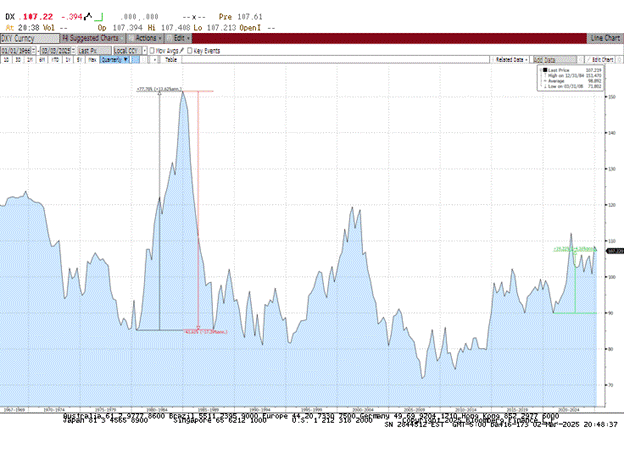
The Plaza Accord of 1985 offers a closer parallel to the Mar-a-Lago vision. Signed at the Plaza Hotel in New York by the G5 nations (the U.S., Japan, West Germany, France, and the U.K.), this agreement addressed the soaring USD, which had risen by nearly 80% against major currencies since 1980. This sharp rise was largely spurred by hawkish monetary policy under Federal Reserve Chairman Paul Volcker and considerable fiscal deficits during the Reagan administration. The strong USD hurt U.S. exports and fueled global trade imbalances, prompting the G5 to intervene.
Under the Plaza Accord, the G5 agreed to intervene in currency markets and adjust economic policies via coordinated action to depreciate the USD. The result was dramatic: within two years, the USD fell by roughly 40%, resetting some of the US’ trade and currency imbalances. However, this shift also exacerbated issues in other countries, notably Japan, where the stronger yen undermined export-led growth and contributed to an economic downturn.