
“Unless the government delivers urgent and significant change, it’s clear the Prime Minister cannot lead us into the next election.” Louise Haigh (former cabinet minister)
We all knew that last week’s local elections in the UK were going to be bad for Labour. Markets were not questioning whether they would have an impact. Instead, the main question on our minds was, ‘how bad will it be?’
Markets were expecting Labour to lose ~1,500 seats and for once, they were right – the actual number of lost seats totaled 1,498. That goes a long way to explaining why we initially saw relatively little reaction in the markets. If anything, sterling began the week a touch stronger and Gilt yields were down slightly as some of the UK risk prima was priced out. That flipped late in Monday’s session as calls for the Prime Minister to step down intensified, but for now at least, Sir Keir Starmer is adamant that he is not going anywhere.
The question now, is for how long? If no challenge comes from a more high-profile candidate in the next day or so, momentum to oust the Prime Minister may fizzle out, but it feels like it is only a matter of time until the question is raised again.
Why does this matter for markets?
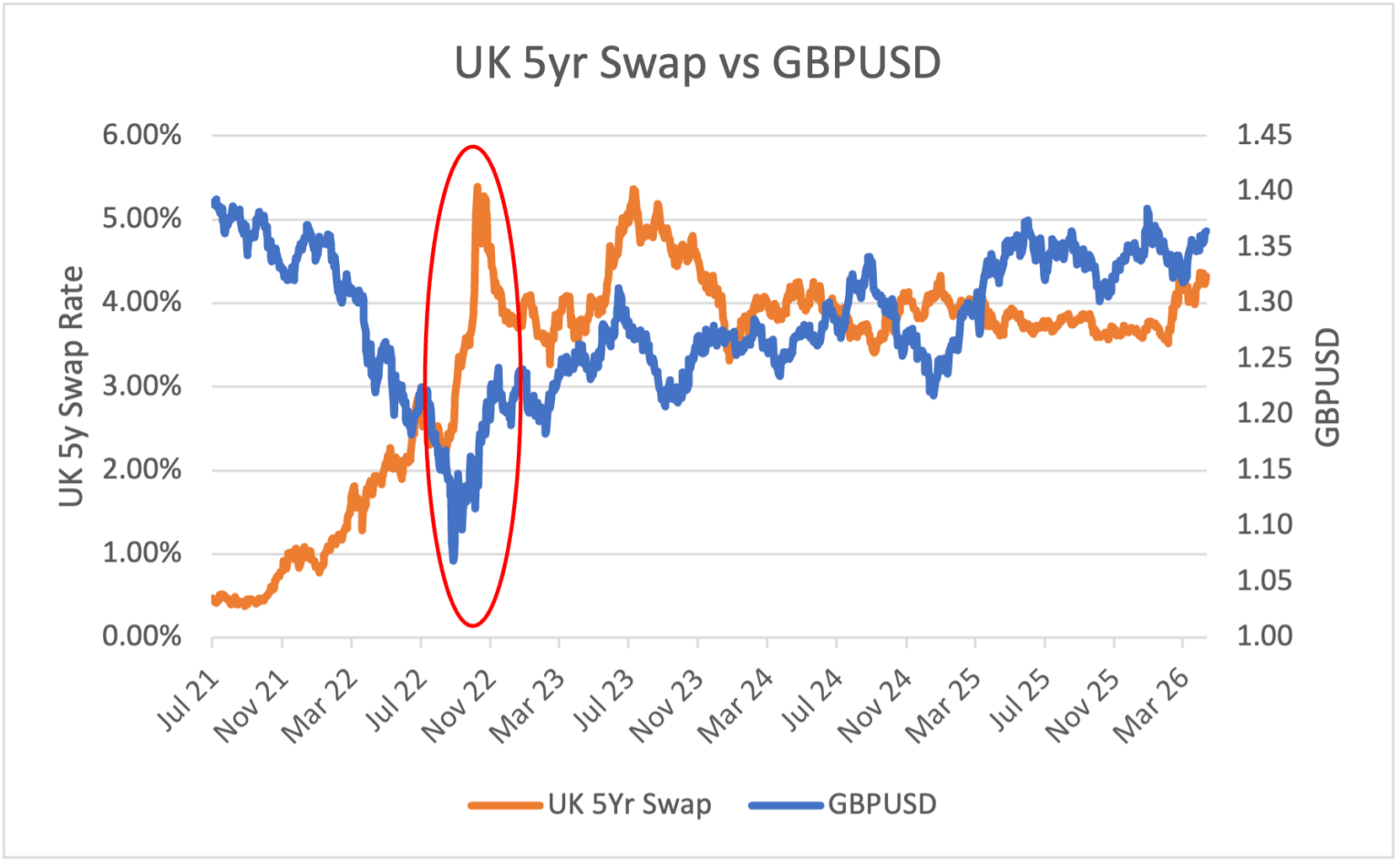
There remains uncertainty around who would replace Sir Keir Starmer in the event of his resignation. Former deputy Prime Minister, Angela Rayner, and Mayor of Greater Manchester, Andy Burnham, are seen as leading candidates and both lean to the left of the current Prime Minister politically. The concern for markets is, therefore, that a change of leadership would likely result in a relaxation of Rachel Reeves’ fiscal rules and increased spending. This, in turn, brings back memories of the policies and market reaction that resulted in Liz Truss’ demise.