Labour’s challenges
In short, the government’s coffers remain exposed to exogenous shocks. The threat of renewed conflict in the Middle East looms large, particularly given the prospect of US military strikes following the midterm elections on 3rd November. Conflicting headlines have oscillated between a temporary ceasefire and renewed military action, with the US President reportedly weighing his options amid preparations for a potential post-election escalation.
Furthermore, the prospect of a Benjamin Netanyahu-led bloc retaining power in the Israeli Knesset adds another layer of uncertainty. The Israeli Prime Minister’s longstanding hawkish stance towards Iran suggests a durable resolution remains far from assured.
As the prospect of renewed conflict lingers, so too do elevated oil prices. Brent crude now sits firmly above $110/barrel, having gained close to 15% over the past month. In turn, UK headline inflation has reached 3.5% year-on-year, its highest reading in 12 months and moving further from the Bank of England’s 2% target. Core CPI has risen to 2.8%, from 2.5% at the Spring Budget, suggesting inflationary pressures are becoming increasingly embedded in the domestic economy.
Commensurately, markets remain hawkish on UK monetary policy, pricing in over 100 basis points of tightening over the next 12 months. Coupled with geopolitical uncertainty and increasing global competition for capital, UK Chancellor John Healey faces the unenviable task of balancing day-to-day spending while rebuilding the Treasury’s fiscal cushion.
What can be done and what does this mean for investors?
The uncomfortable reality for the Chancellor is that there is no silver bullet. Further tax increases risk suppressing already fragile economic activity, while meaningful spending cuts would prove politically contentious. Neither offers an attractive route to fiscal consolidation against a backdrop of stubborn inflation and elevated debt-servicing costs.
Ultimately, sustained economic growth remains the most palatable escape route. Stronger productivity, greater private investment and higher real incomes would bolster tax receipts without necessitating further tax increases. Yet structural improvements take years to materialize, and the gilt markets are not typically as patient.
The OBR forecasts growth of just 1% in 2027, down from 1.6% in its Spring forecasts, with government debt expected to peak at 97.3% of GDP in 2028/29. Consequently, rebuilding fiscal headroom remains heavily dependent on an economic recovery that is far from guaranteed — a reliance on optimistic growth assumptions that also complicated Rachel Reeves’ fiscal strategy.
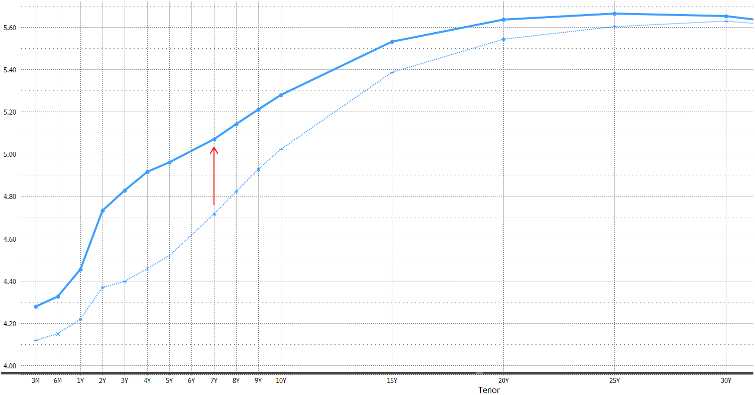
For gilt investors, the immediate Budget reaction was encouraging. Yields declined modestly following Healey’s announcement, suggesting markets welcomed the absence of unfunded spending commitments. However, the distinction between a Budget that avoids unsettling markets and one that fundamentally improves Britain’s fiscal and growth trajectories is considerable.
Elevated global yields, persistent inflation and competition for capital from sovereigns and AI-related corporate borrowing suggest investors may demand a structurally higher term premium than in the preceding decade. Reduced longer-dated gilt issuance may alleviate some pressure at the long end of the curve. However, it does little to eliminate underlying fiscal vulnerabilities.
For sterling, the outlook is similarly nuanced. Higher interest rates may provide near-term support through favorable yield differentials, yet this relationship becomes fragile if monetary tightening reflects deteriorating inflation expectations rather than stronger economic fundamentals. Should investors question Britain’s fiscal sustainability or economic performance, sterling could weaken even as gilt yields rise.
For borrowers and hedgers, these dynamics have important practical implications. With markets anticipating further Bank of England tightening, floating-rate borrowers face increasingly onerous debt-servicing obligations. Interest rate swaps offer certainty over the benchmark rate, whereas caps protect against rising rates while preserving downside participation in any eventual decline, albeit at an upfront premium. The relative attractiveness of either depends on cash-flow sensitivity, refinancing horizons and appetite for optionality.
Ultimately, the Chancellor has avoided an immediate fiscal own goal, but Britain’s fortunes remain exposed to forces beyond Westminster’s control. He cannot dictate geopolitical developments, global capital flows or the Bank of England’s next move. What he can control, however, is the credibility of fiscal policy and the resilience of Britain’s public finances to future shocks.
Investors and borrowers share clear parallels. While the direction of interest rates and currencies remains inherently uncertain, exposure to these risks can be actively managed. Prudent hedging can protect cash flows, mitigate adverse market movements and introduce greater certainty into an unpredictable environment. After all, neither the Chancellor nor investors can control the markets, but both can manage their exposure to them and avoid an unnecessary gilt trip.