What’s New This Month
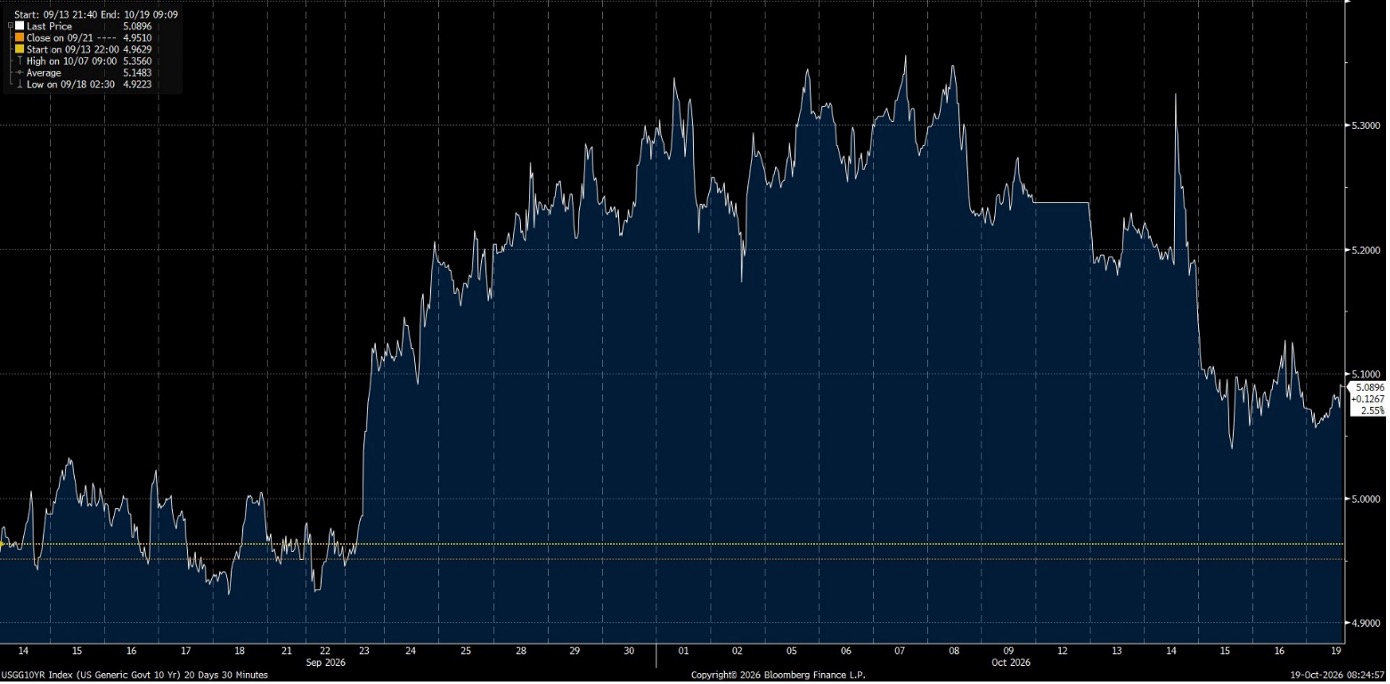
This month added something new to that mechanism: the AI capital-competition story which in our view is starting to look like a credit story . On October 15 and 16, CoreWeave’s five-year CDS spreads widened to a record level before partially retracing. Reports surfaced of a materially lower Anthropic IPO valuation target, and a widely circulated industry note flagged that more than $3.5 trillion of announced AI infrastructure spending could be exposed to impairment by the end of the decade. Those are balance-sheet headlines, not supply-and-demand ones, yet they moved the 10-year more in 48 hours than the hottest inflation print of the year did. The debt issuance volume is a published estimate; whether that issuance now carries real default risk, and whether that risk is driving part of the rates move remains to be seen. For clients with exposure to data center financing, private credit structures tied to hyperscaler capex, or infrastructure assets levered to the AI buildout, this is the theme to watch most closely into year-end.
Why the Term Premium Isn’t Going Away
None of this changes our underlying view that this year’s elevated long-end yields reflect a genuine repricing of the term premium, not a temporary overshoot. Quantitative tightening removing the price-insensitive buyer, persistent fiscal pressure in the US and France, and AI-related financing conditions, both as a capital-competition story and potentially now as a credit story, all point toward a structurally higher and more volatile term premium rather than a return to the low-rate-volatility regime of the past decade. Cheap post-crisis capital may not return soon. What this month showed is that the path to any given yield level is likely to stay far noisier than the destination itself.
What This Means for Positioning
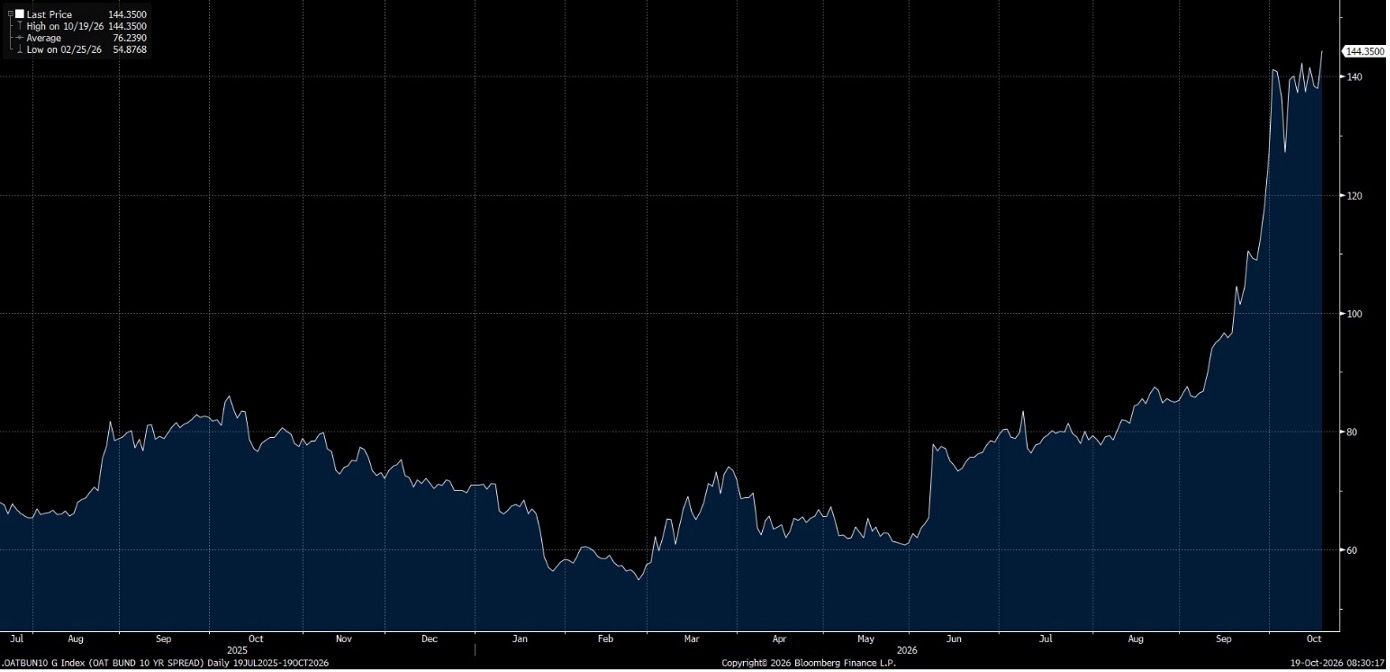
For private capital clients, the practical implication is straightforward: consider hedging around capping how high financing costs can rise, not around predicting the next print or the next Fed speech. Rates volatility has been elevated and bidirectional, which argues for discipline around duration hedges rather than conviction bets on direction.A disciplined approach should also be applied towider tolerance bands on financing costs tied to AI-infrastructure-adjacent exposure, given how quickly sentiment in that sector has started to impact rates more broadly. Separately, the France-Germany spread has already started widening again, back to roughly 144 bps as of October 19 after easing into the 130s earlier this month, suggesting the repricing ahead of the Moody’s review on October 23 and the French budget vote on October 28 may already be underway rather than purely a forward risk.