The Real Yield Story: when will investors return to US treasuries?

France, Fiscal Risk and the New Cost of Capital

16 October 2026

Key Takeaways


  • Global yields were already elevated before recent European sovereign spread volatility, with inflation, energy pressures and higher real yields all contributing to the repricing 
  • The AI CapEx boom is creating a major new source of demand for capital, increasing competition across bond markets and helping push term premiums higher 
  • France appears particularly vulnerable because higher global rates are colliding with weak fiscal health, large deficits and more stark growth prospects
  • For borrowers, elevated rates volatility reinforces the importance of reassessing interest rate exposure and taking risk off the table during calmer market windows

It’s been a volatile few weeks, particularly for European sovereigns. Franco-German spreads have pulled back from recent highs following positive signs on the political front, but flare–ups in spreads between OATs and Bunds remain a concern.

AI CapEx is Driving Up the Cost of Capital  

While European sovereign spreads have been in the headlines in recent weeks, global yields were already elevated. The obvious catalyst was energy prices. The shock from the Iran war and subsequent regional conflicts has resulted in ongoing supply chain issues. Front-end Brent crude remains above $100/bbl as of the time of writing, while Dutch TTF futures are at their highest levels since the start of the year. The inflationary impulse saw markets price in higher rates, as they anticipated global central banks would need to respond to the shocks. 

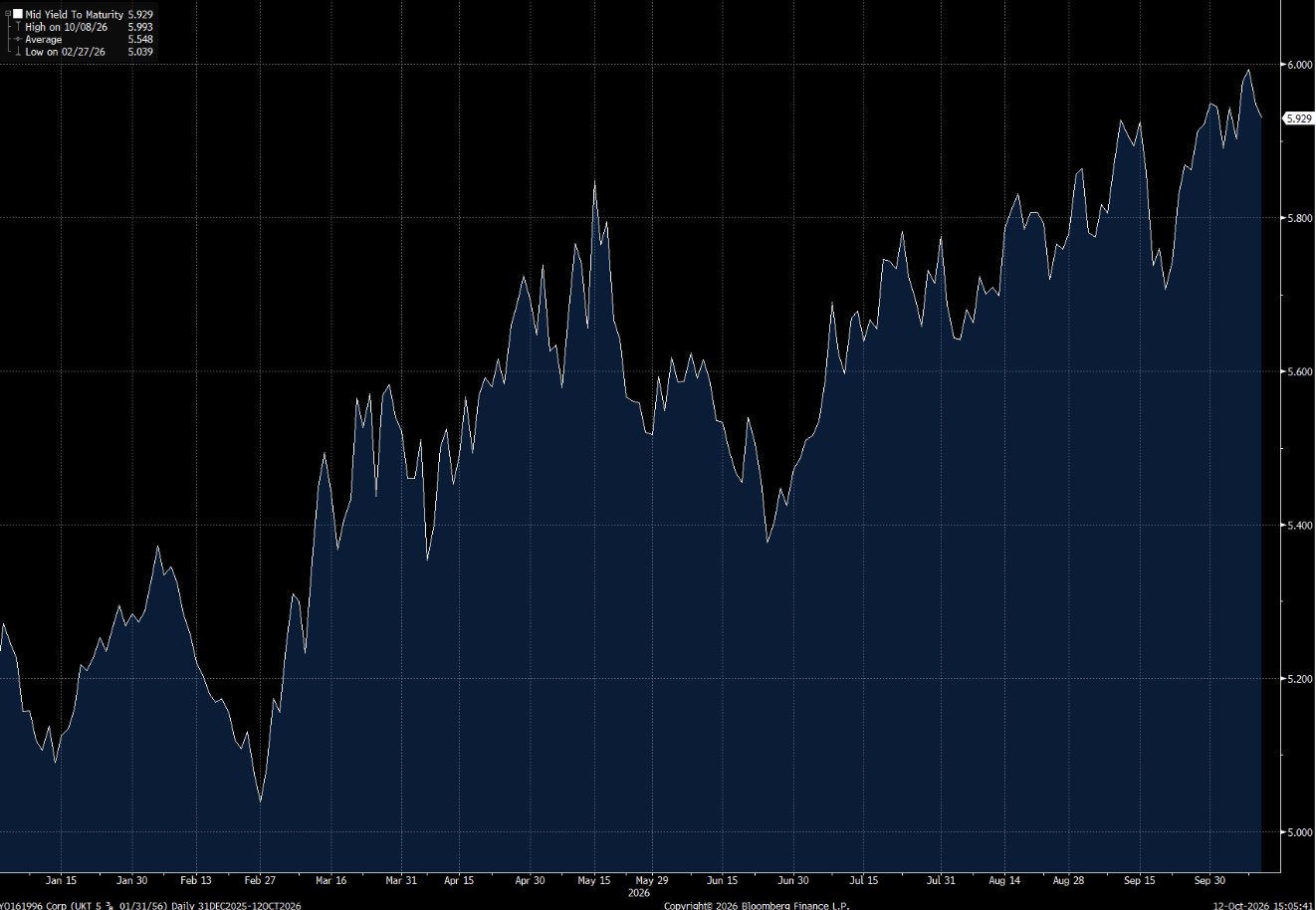
In the interim, yields have continued to creep higher. Thirty-year UST yields hit post- 2002 intraday highs recently, while 30-year gilt yields touched 6% for the first time since 1998.  

30-year UST yields (source: Bloomberg)

However, it’s not inflation expectations that have continued to push yields higher. Instead, global real yields have been increasing. As my colleague Harry Woolman pointed out recently, a contributing factor to this has been the historic AI CapEx cycle. The scale of private debt issuance in this space has created a supply boom in the private sector, creating competition across bond markets. This increase in aggregate duration has been pushing term premiums higher, while the demand for investment capital as part of the AI CapEx boom is also likely driving neutral rates higher. 

Why France is particularly vulnerable 

A question remains: if structural factors are driving global rates higher, why has French debt appeared particularly stressed?  

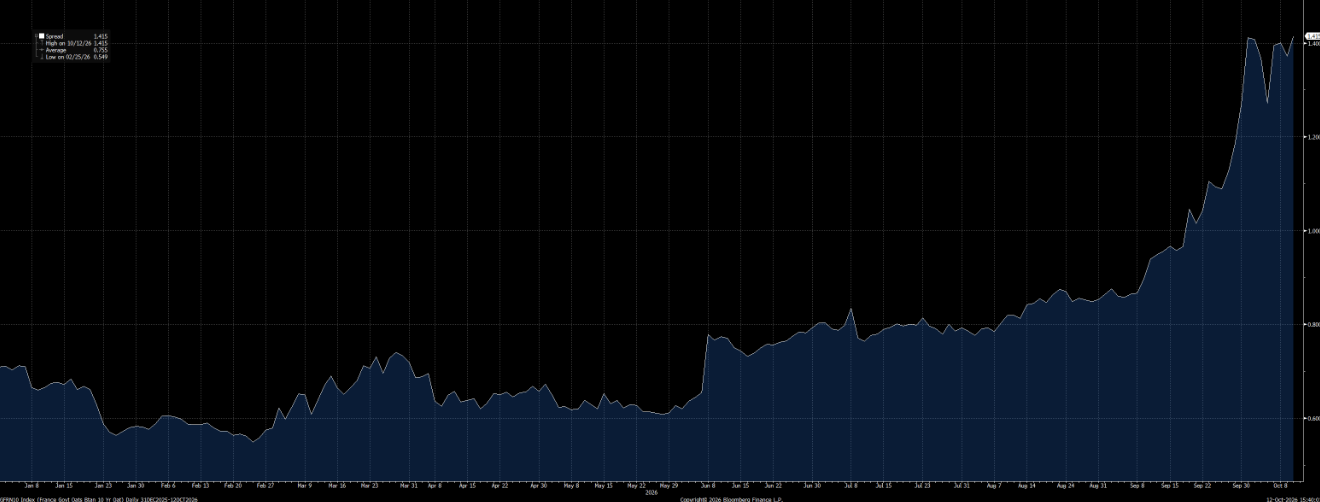
10-year OAT/Bund Spreads (source: Bloomberg)

The first answer is an obvious one: poor fiscal health. France’s debt-to-GDP ratio stands at 119%, substantially higher than the euro area average of 87.8%. The country has not run a budget surplus since 1974, one of the longest runs globally. In fairness, Italy has not done so since 1925, but it has managed to achieve a primary budget surplus in recent decades, unlike France. 

The impact on French yields is clear. When RN leader Marine Le Pen vowed recently to continue cutting the French deficit, 10-year Franco-German spreads tightened by 13.7 bps in one day. That was the largest decline since the Covid-19 pandemic in March 2020. Markets are therefore clearly responding to the fiscal outlook. 

However, other structural factors matter too. Rising neutral rates can be particularly punishing for countries with large deficits and weaker growth prospects. While the global CapEx boom pushes rates higher, the potential growth benefits are not distributed uniformly across geographies. Weaker French growth, compared to the US, for example, means real rate increases become more punishing as the interest-growth differential widens. It could also contribute to a negative feedback loop as higher rates worsen the fiscal outlook, leading to further sell-offs of French debt. 

What this means for rates hedging 

The key takeaway is that rates volatility looks set to remain elevated for the foreseeable future. Inflationary risks remain ever-present, with no clear end in sight to the conflicts in Ukraine and the Middle East. It also remains unclear how the historic CapEx cycle we find ourselves in will end, and what the ultimate impact of frontier AI models will be on the global economy. 

Elevated volatility has also resulted in widening spreads and charges when placing rates hedges. It would therefore be advisable to take risk off the table, particularly during lulls in market volatility. Given the uncertainty over the path ahead of global bond yields and central bank rates, eliminating interest rate risk has become particularly important. 

Author

Matthew Lee, Associate, Global Capital Markets

By submitting this form you are agreeing to our Privacy Policy

Let’s talk.

Whether it’s about how Validus can protect your portfolio returns, streamline your fund finance operations, or bring your risk and financing data together in our Horizon platform – we’d like to hear from you.

90 Whitfield Street
5th Floor
London
W1T 4EZ

+44 203 923 8575