
What will a second Trump term look like? On the surface, his policies appear more populist and nationalist than in 2016. Key proposals include adding a 10% tariff on all imports coming into the US, adopting a 4-year plan to fully phase out all Chinese imports of essential goods, and stopping the flow of illegal immigrants into the US. His Trump Reciprocal Trade act, which would not allow the transfer of American jobs overseas, is also on the agenda. Other policies include cutting corporate tax from 21% to 15%, seeking a record defense spending budget and removing the US from international conflicts.
These are just a few of the policies he intends on pushing through should he become President. A lot will depend on how the Senate and Congress are split. Support will be required from the Democratic party on certain policies such as trade – since they are not purely budgetary, they will require 60 votes from the Senate to go through (implying a need for Democratic backing). Under a second term with Trump, everything points to more spending from his administration with less revenues raised from taxes, likely to result in a widening debt deficit in the US (not counting for potential offsets from additional revenues from tariffs, should they be implemented).
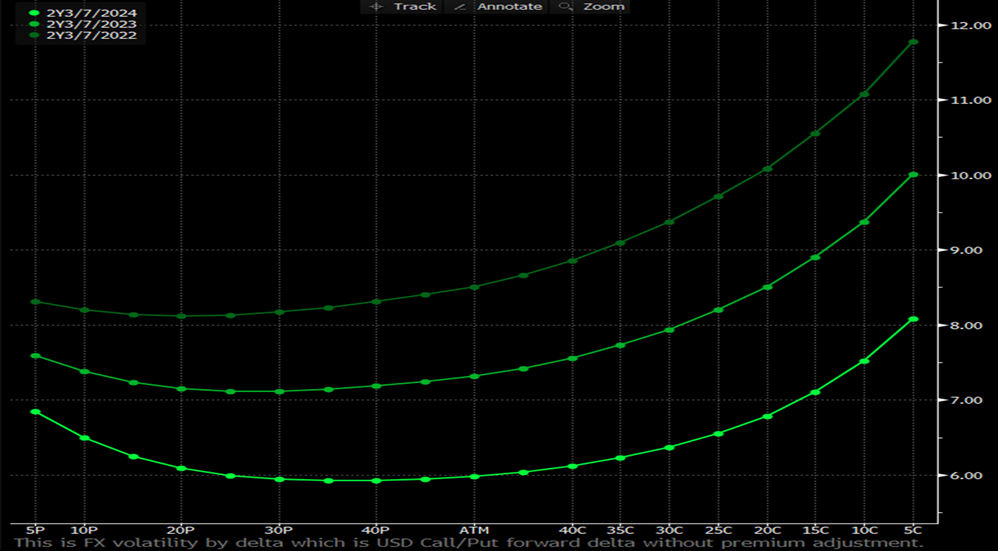
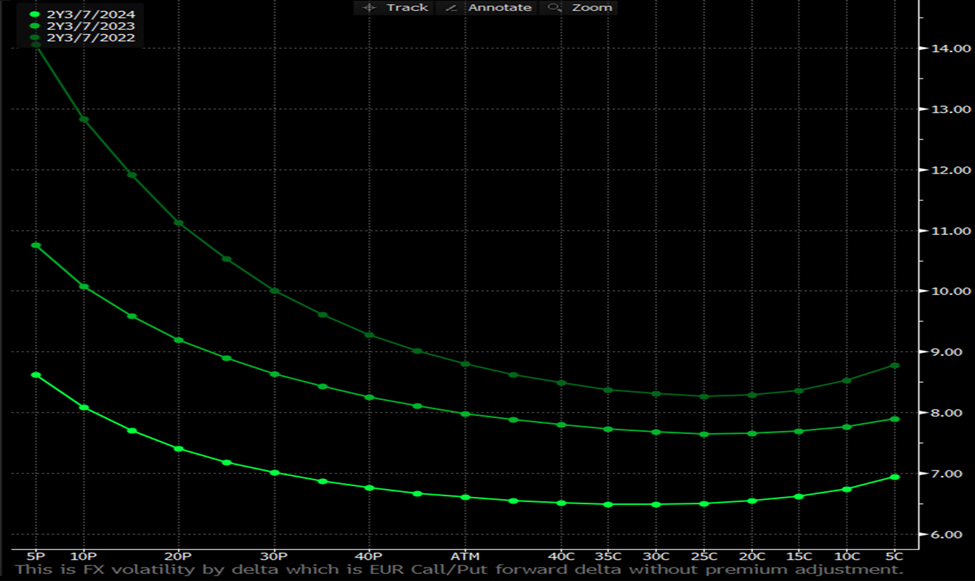
Trump’s agenda poses certain risks to financial markets. Over the short to medium-term, there is a possibility of seeing weakness in countries such as Mexico, China and Canada, which are important trade partners to the US. With Canada’s economy stagnating over the last quarters, additional 10% tariffs from a possible Trump administration could hurt the Loonie. As seen below, the current volatility smile on 2-year USDCAD options has shifted lower versus levels observed over the last couple of years. The current ATM USD call option trades around a mid of 5.98%, close to 30% lower than in March 2022. We see a potential opportunity there, with volatility to increase over the next 2 years under a Trump administration. The same trade idea is valid when looking at USDCNY options, although the pair does not move like USDCAD given it is not a completely free-float currency.