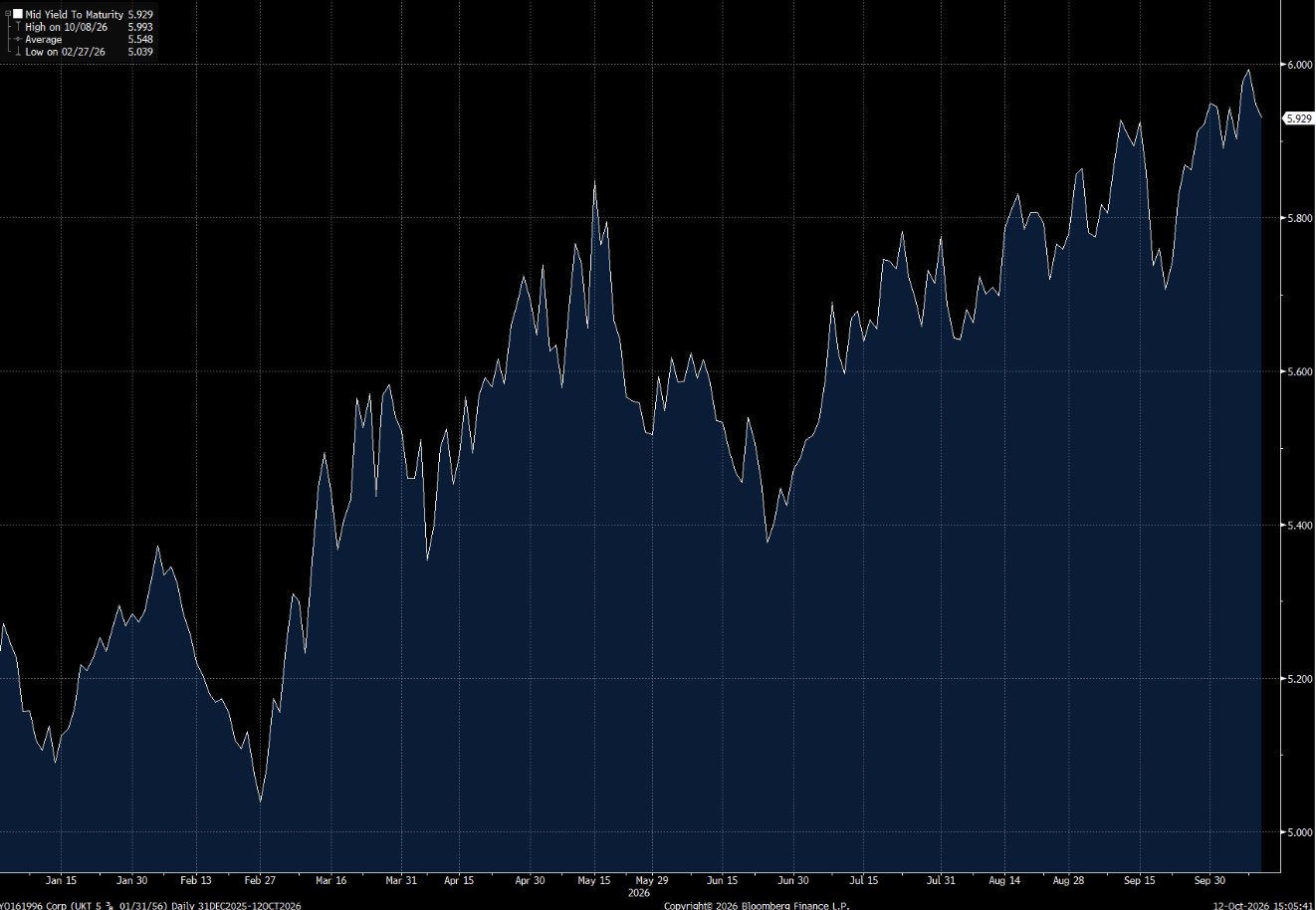
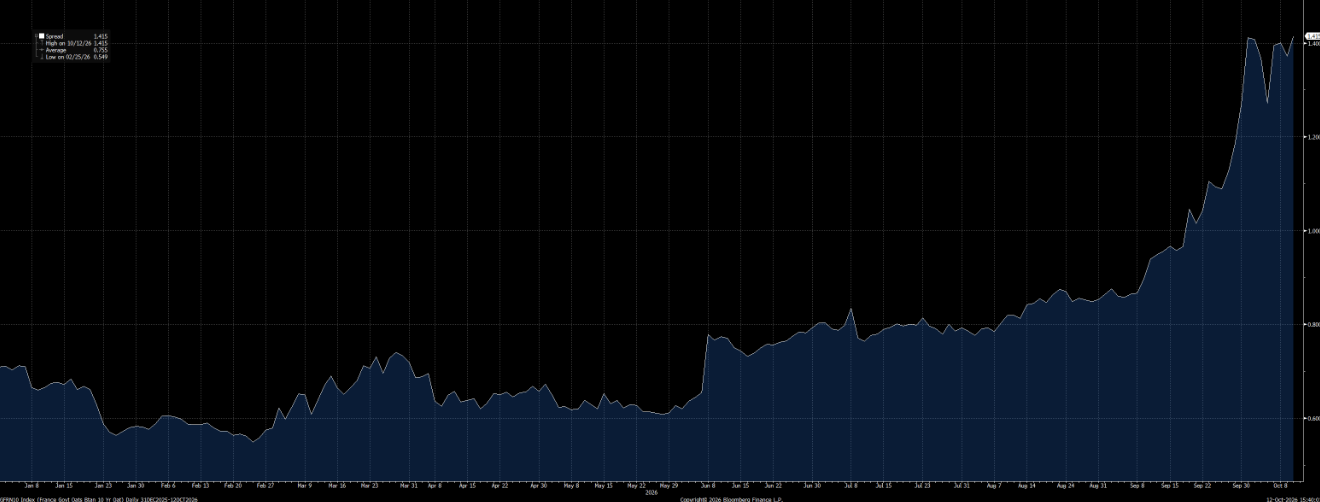
The first answer is an obvious one: poor fiscal health. France’s debt-to-GDP ratio stands at 119%, substantially higher than the euro area average of 87.8%. The country has not run a budget surplus since 1974, one of the longest runs globally. In fairness, Italy has not done so since 1925, but it has managed to achieve a primary budget surplus in recent decades, unlike France.
The impact on French yields is clear. When RN leader Marine Le Pen vowed recently to continue cutting the French deficit, 10-year Franco-German spreads tightened by 13.7 bps in one day. That was the largest decline since the Covid-19 pandemic in March 2020. Markets are therefore clearly responding to the fiscal outlook.
However, other structural factors matter too. Rising neutral rates can be particularly punishing for countries with large deficits and weaker growth prospects. While the global CapEx boom pushes rates higher, the potential growth benefits are not distributed uniformly across geographies. Weaker French growth, compared to the US, for example, means real rate increases become more punishing as the interest-growth differential widens. It could also contribute to a negative feedback loop as higher rates worsen the fiscal outlook, leading to further sell-offs of French debt.
What this means for rates hedging
The key takeaway is that rates volatility looks set to remain elevated for the foreseeable future. Inflationary risks remain ever-present, with no clear end in sight to the conflicts in Ukraine and the Middle East. It also remains unclear how the historic CapEx cycle we find ourselves in will end, and what the ultimate impact of frontier AI models will be on the global economy.
Elevated volatility has also resulted in widening spreads and charges when placing rates hedges. It would therefore be advisable to take risk off the table, particularly during lulls in market volatility. Given the uncertainty over the path ahead of global bond yields and central bank rates, eliminating interest rate risk has become particularly important.