The transmission of this shock extends far beyond energy markets. Sustained higher gas prices threaten to lift inflation expectations, limiting central banks’ ability to ease policy and keeping sovereign yields elevated. For governments already facing limited fiscal headroom, the result is an uncomfortable feedback loop: higher energy prices → stickier inflation → higher yields → less fiscal space → greater political pressure to intervene.
Why Gas Matters More Than Oil
Brent – up 57% this year and 7% this week – has nevertheless been eclipsed by natural gas as Europe’s immediate energy concern.
Why? Oil is a highly fungible global commodity, with cargoes relatively easily rerouted when supply routes are disrupted. LNG is less flexible: liquefaction capacity, shipping availability and long-term contractual arrangements constrain the speed with which lost supply can be replaced.
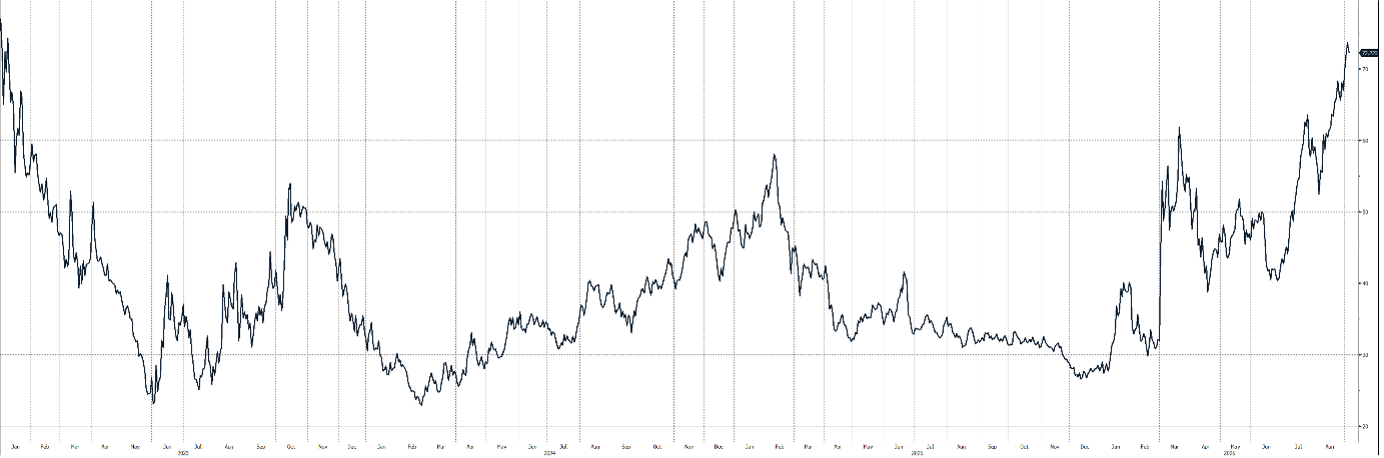
Qatar, responsible for around one-fifth of global LNG supply, remains acutely exposed to disruption in the Strait of Hormuz, leaving European gas prices particularly sensitive to any escalation in the region. The resumption of US-Iran hostilities has therefore been accompanied by another sharp repricing of European gas.
Natural gas accounts for approximately 20% of EU final energy consumption, rising to around one-third in the UK. With storage needing to be replenished ahead of winter largely regardless of price, European buyers become increasingly price-insensitive as inventories decline. Higher prices therefore struggle to destroy sufficient near-term demand, leaving households and industry to absorb the eventual cost.
Hard Choices: From Power Prices to Politics
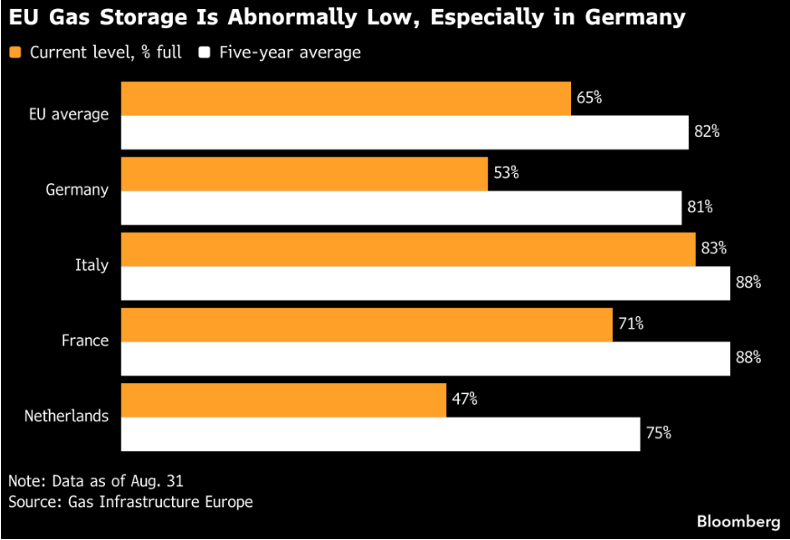
Italy appears relatively well placed, with storage having recovered toward historical norms. Yet that improvement has partly reflected government incentives to hold rather than consume gas – illustrating the fiscal cost of securing energy supply as winter approaches.
For central banks, the complication is that another energy shock arrives before the previous inflation episode has entirely disappeared from public memory. Policymakers can look through a temporary supply shock; they have considerably less freedom to do so if higher energy prices begin feeding into inflation expectations, wages and services prices.
Markets therefore do not need to price outright rate hikes for the energy shock to matter. A shallower easing cycle, higher inflation risk premiums and greater term premiums would be sufficient to keep sovereign borrowing costs elevated.
Governments also face an uncomfortable choice: allow wholesale energy prices to pass through and force households to absorb another real-income shock, or intervene through subsidies, tax cuts and price caps, transferring part of the burden onto already stretched public balance sheets. Neither outcome is particularly supportive for European assets. Nor will the burden necessarily be evenly distributed. Countries entering winter with weaker fiscal positions have less capacity to absorb another round of energy support, potentially driving renewed divergence across European sovereign spreads.
Persistent cost-of-living pressures have historically created fertile ground for anti-incumbent politics. That relationship is already facing a real-world test. In Saxony-Anhalt’s September 6 election, the Alternative für Deutschland (AfD) secured 43.8% of the vote, more than twice the CDU’s 17.2%, while Marine Le Pen remains a frontrunner in France’s 2027 presidential race. Energy is hardly the sole explanation for the strength of either political movement, but both have pledged to lower energy costs – and another winter of elevated household bills would scarcely make life easier for Europe’s political center.